


Before we talk about how to get a baby to sleep through the night, we need to fix what that phrase actually means — because the common understanding of it causes a lot of unnecessary worry. “Sleeping through the night,” in the clinical sense used by sleep researchers, typically means a stretch of about 6 hours, not the twelve uninterrupted hours many exhausted parents imagine everyone else's baby is getting. And here's the part nobody tells you: all babies (and adults) wake briefly between sleep cycles through the night. The skill that makes a baby seem to “sleep through” isn't not waking — it's being able to resettle back to sleep without needing help. That distinction changes everything about how you approach it.
Realistic Expectations by Age
Knowing what's developmentally normal saves a great deal of anxiety:
- 0–3 months: Newborns need to feed frequently, including overnight, and have tiny stomachs. Night waking every 2–4 hours is normal and necessary. This is not the stage to expect or engineer sleeping through.
- 3–6 months: Some babies begin to consolidate night sleep and may manage a longer stretch, but many still wake to feed. Huge variation is normal.
- 6–12 months: Many (not all) babies are developmentally capable of sleeping a long stretch without a feed, though night wakings from teething, milestones, and separation anxiety are common.
- 12 months+: Most are physically able to sleep through, but continued wakings remain within the range of normal for plenty of toddlers.
If your baby isn't “there” yet, it very often just means they haven't reached that stage — not that anything is wrong.
The Foundations That Build Good Night Sleep
Rather than a single trick, consolidated night sleep grows from a handful of foundations:
1. A Consistent, Calming Bedtime Routine
A predictable sequence — bath, into a sleep sack, a feed, a book or song, into the cot — signals to a baby's body and brain that sleep is coming. The same steps in the same order every night become a powerful cue. It needn't be long; 20–30 minutes of calm, dim, low-stimulation wind-down is plenty.

2. Well-Timed Sleep (Avoiding Overtiredness)
An overtired baby sleeps worse and wakes more, not less. Age-appropriate wake windows and a bedtime that isn't too late are central to good night sleep — our wake windows guide covers the timing in detail. A baby put down calm and drowsy, at the right time, settles far more easily than one who's been kept up too long.
3. Drowsy but Awake
This is the heart of independent sleep. Where age-appropriate, putting a baby down when they're drowsy but still awake — rather than already fully asleep — helps them learn to fall asleep in their cot. The reason it matters: a baby who falls asleep being rocked or fed, then wakes between cycles in a different situation (alone, in the cot), is more likely to need recreating those same conditions to resettle. Learning to fall asleep independently at bedtime is what lets them resettle independently at 2am.
4. The Right Sleep Environment
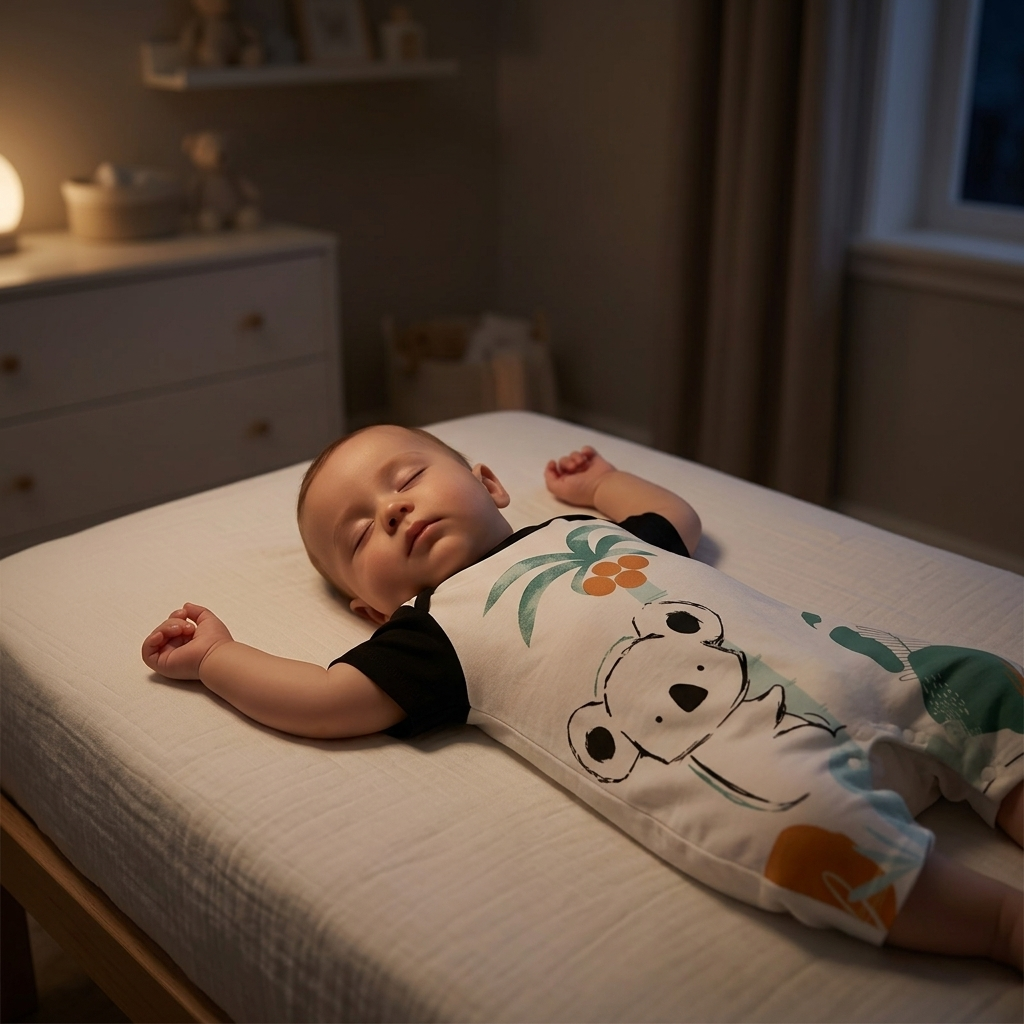
Dark, cool, and quiet (or with consistent white noise). Crucially, the sleep space must follow safe-sleep guidance: the AAP recommends babies sleep on their back, on a firm flat surface, in a bare cot with no loose bedding, bumpers, pillows, or soft toys, ideally in the parents' room (but their own sleep surface) for the first 6–12 months. A sleep sack keeps a baby warm without loose blankets. Our sleep sack guide helps you choose one.
Dropping Night Feeds (When the Time Is Right)
For older babies (typically 6 months+) who are growing well and developmentally ready, night feeds may gradually reduce — but this is a conversation to have with your pediatrician before actively night-weaning, as some babies genuinely need night feeds for longer. When the time is right, gradual approaches (slowly reducing the volume or length of night feeds over a week or two) tend to be gentler than abrupt removal. Never rush night-weaning a baby who isn't gaining weight well or whose doctor hasn't confirmed they're ready.
On Sleep Training
“Sleep training” — a range of methods for teaching independent settling — is a personal decision, and a divisive one. The evidence broadly suggests that several gentle, gradual methods can be effective and are not harmful when done responsively, but there is no single “right” approach, and plenty of families never formally sleep-train at all and do just fine. What matters is choosing something that fits your baby's temperament and your own instincts, applying it consistently, and never feeling pressured into a method you're uncomfortable with. If you go this route, doing it after about 4–6 months, once some of the foundations above are in place, tends to be more workable.
The Honest Bottom Line
Good night sleep is built, gradually, from consistent routines, well-timed sleep, a safe and calm environment, and — as your baby matures — the chance to practise settling independently. It rarely arrives overnight, and there will be regressions along the way (teething, milestones, illness, travel). On the hard nights, hold onto this: night waking is biologically normal, your baby will get there, and “through the night” is closer than it feels at 3am.
For more, see our guides on wake windows, the 4-month sleep regression, and the baby nap schedule.