


If you've ever put socks on your baby, turned around, and found one already lost under the sofa, you're in good company. Keeping baby socks on is one of those small, universal parenting battles. The good news: a few simple tricks—and knowing when to skip socks entirely—make a real difference. Here's what actually works.
Why baby socks fall off so easily
Babies have chubby, cone-shaped little feet with almost no heel to hold a sock in place, and they kick and wriggle constantly. Add a sock that's slightly too big or too loose at the ankle, and it doesn't stand a chance. So the first fix is simple: fit.
1. Get the size and fit right
A sock that's too big slides straight off. Choose socks sized to your baby's actual foot, with a snug (not tight) ankle that sits above the ankle bone. Ribbed or elasticated cuffs grip far better than a plain hem. If you're unsure how foot sizes work by age, our baby shoe size guide shows you how to measure at home.
2. Choose booties over loose socks
Knit booties with a ribbed ankle cuff, or soft first-walker styles, tend to stay put far better than thin ankle socks—the higher cuff hugs the leg and gives less to kick off.
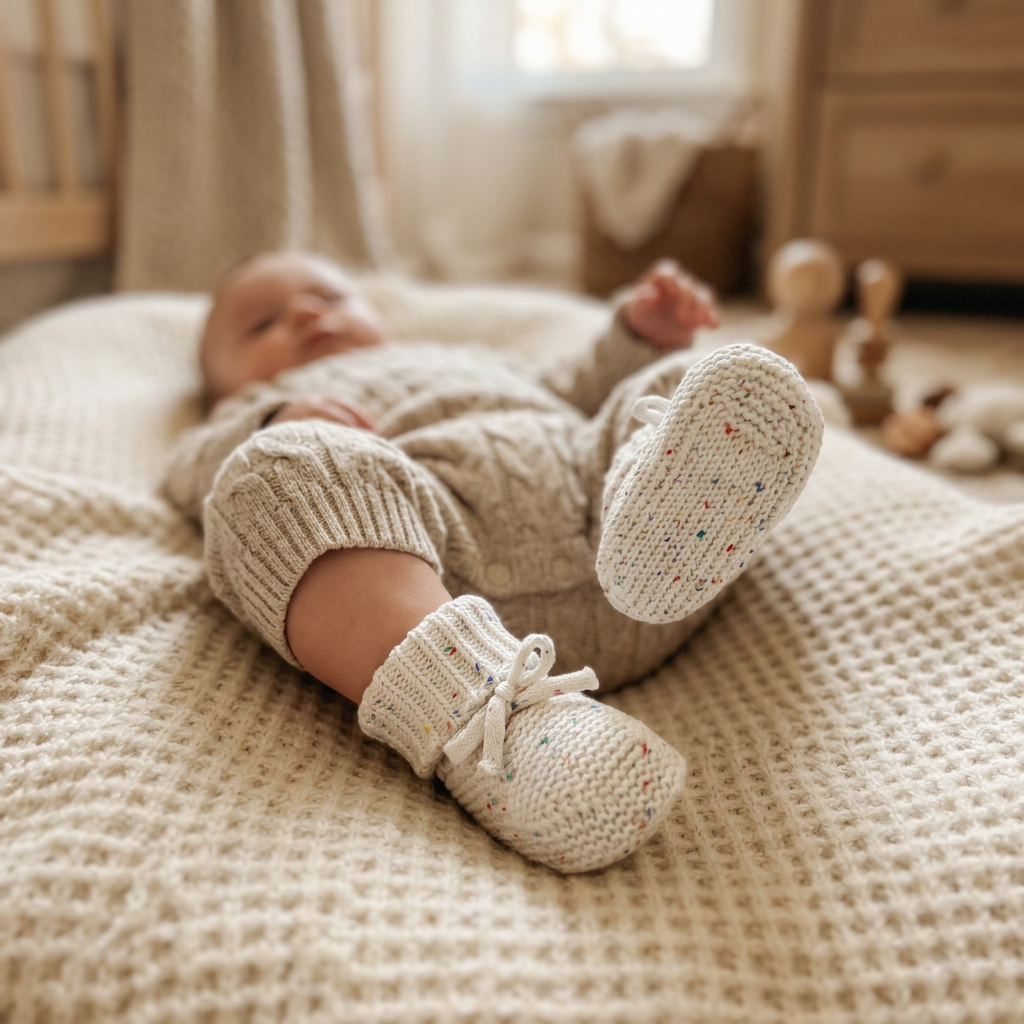
3. Use footed one-pieces for guaranteed coverage
Honestly, the most reliable trick of all is to skip separate socks when you can. A footed sleeper, romper, or knit jumpsuit keeps your baby's feet covered and warm with nothing to kick off—perfect for chilly days, naps, and outings. For everyday warmth, a footed one-piece is unbeatable.
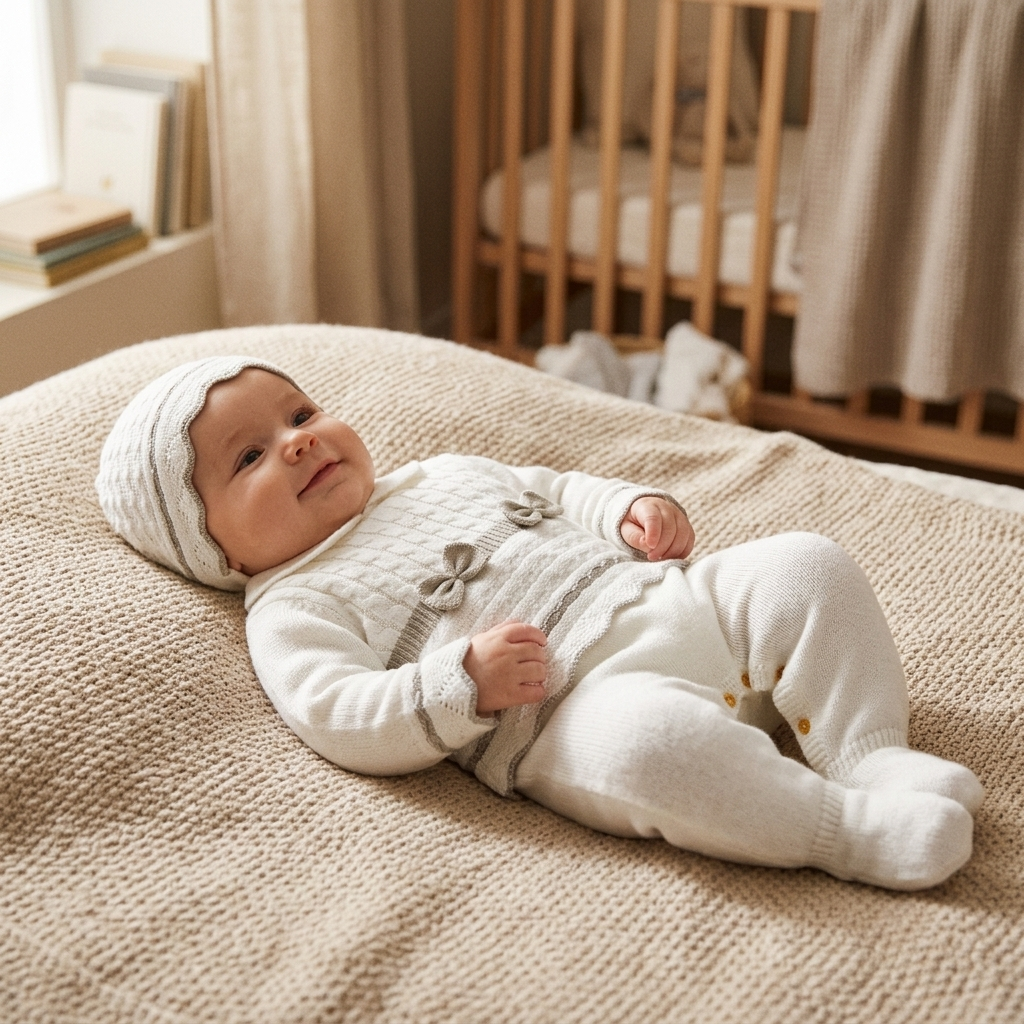
4. Layer socks under footed outfits or leggings
If you do want socks for extra warmth, put them on under a footed sleeper or a pair of leggings. The outer layer holds them in place, and your baby can't pull them off. It's a simple, effective combination for cold days.
5. Try sock-and-shoe styles
Soft "sock shoes" and knit booties that fasten a little higher up the ankle are designed to resist kicking off. For babies who treat every sock as a challenge, these stay-on styles are worth it.
A quick safety note
Whatever you choose, check the fit isn't leaving marks—snug should never mean tight. Elastic that digs in can be uncomfortable and restrict circulation, so look for soft, gentle cuffs. And for sleep, remember that a footed sleeper or sleep sack is safer than loose blankets. For more on safe, comfortable clothing, see our guide to baby clothes safety.
The takeaway
The trick to keeping baby socks on is mostly about fit and design: choose the right size, favour ribbed-cuff booties over loose socks, and lean on footed one-pieces when you just want their feet covered without the fuss. A little strategy, and you'll spend a lot less time hunting for a single lost sock. For soft, breathable everyday basics, browse our organic cotton baby clothes.