


As the nights get cooler, one worry keeps new parents up: is my baby warm enough while they sleep? It's a fair question—but the answer isn't simply "more blankets." Keeping your baby cosy overnight is really about the right sleepwear and safe layering, not loose bedding. Here's how to keep your little one warm at night, safely.
This is general guidance, not medical advice. For safe-sleep specifics, always follow your pediatrician and your national safe-sleep guidelines.
Skip loose blankets—use a sleep sack instead
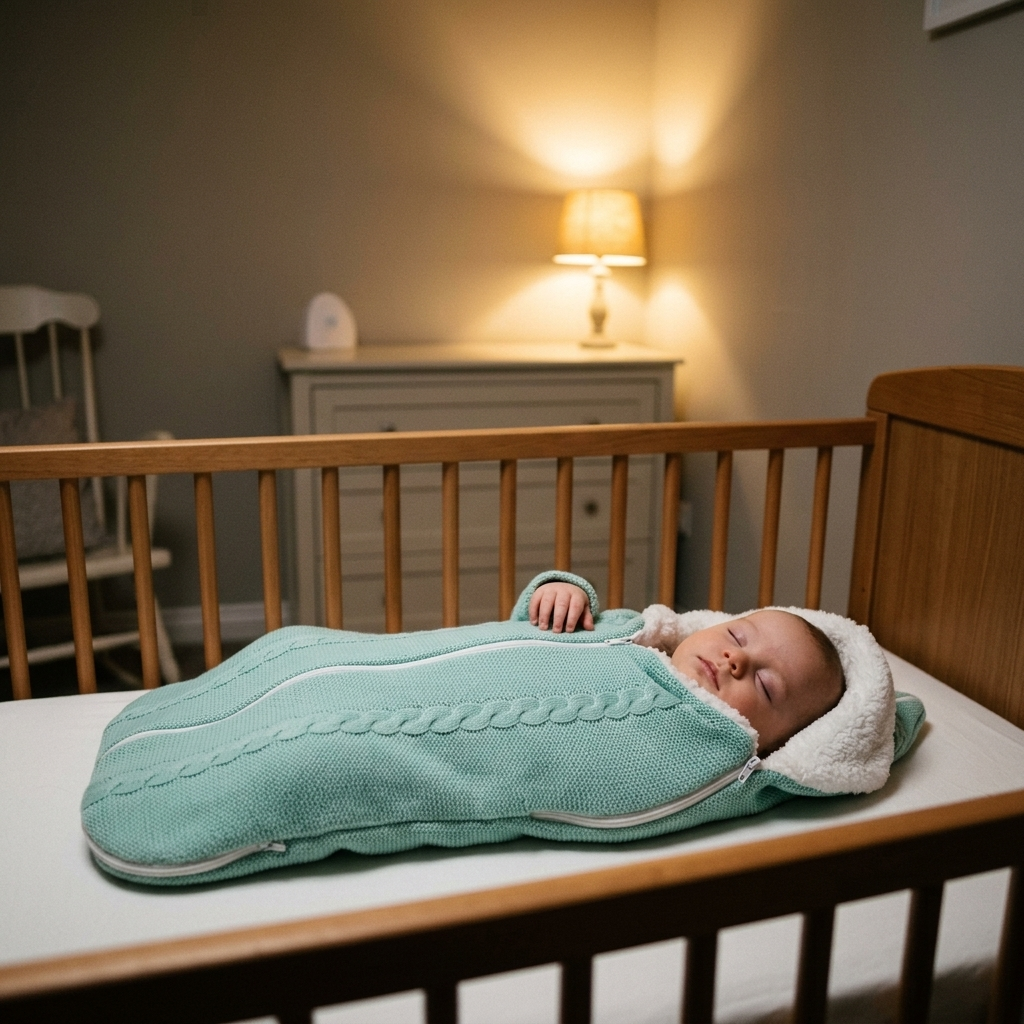
The safest way to keep a baby warm overnight is a wearable blanket, or sleep sack, rather than loose blankets, quilts, or duvets in the crib. Loose bedding is a suffocation risk for young babies, so a sleep sack is the go-to: it keeps your baby cosy and covered all night, can't be kicked off or pulled over the face, and gives you real peace of mind.
Start with a warm base layer
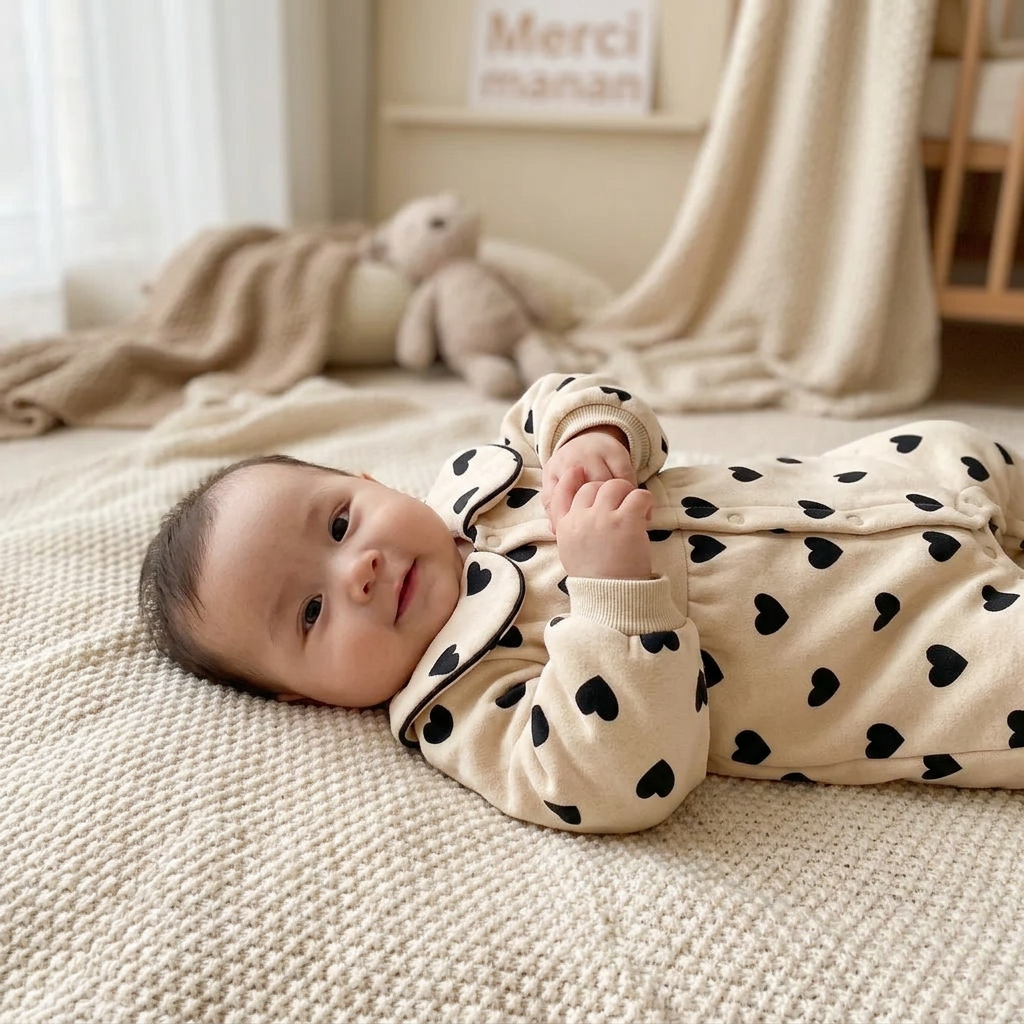
Under the sleep sack, dress your baby in a comfortable base layer suited to the room temperature. In cooler weather that usually means a long-sleeve footed sleeper or a soft cotton one-piece; on milder nights, a short-sleeve bodysuit under the sack may be plenty. The sleep sack does the "blanket" job, so the layer underneath just needs to be soft, breathable, and warm enough for the room.
Aim for a comfortable room temperature
A comfortably cool room—many guidelines suggest around 16–20°C (about 68–72°F)—is generally considered ideal for baby sleep. Rather than cranking up the heat, adjust your baby's layers to the room. Overheating is linked to sleep risks, so warmer isn't always safer; the goal is cosy, not hot.
How to tell if your baby is too warm or too cold
Forget hands and feet—they often feel cool even when your baby is perfectly warm. Instead, feel the back of the neck or the chest: it should feel comfortably warm, not hot, sweaty, or cold. Signs your baby is too hot include sweating, damp hair, flushed cheeks, or rapid breathing. If you spot those, remove a layer. For more detail, see our guide on how to tell if your baby is too hot.
Choose the right weight for the season
Sleep sacks and sleepers come in different thicknesses (often given as a TOG rating): lighter for warmer months, thicker and cosier for winter. Match the weight to the season and your room temperature, and layer the base underneath accordingly. If you're unsure how to combine pieces, our guide to layering baby clothes by weather walks through it.
A quick safe-warmth checklist
- Sleep sack, not loose blankets—the single most important point.
- A base layer matched to the room, warm but not bulky.
- A comfortably cool room, roughly 16–20°C / 68–72°F.
- Check the neck or chest, not the hands, for true temperature.
- No hats indoors for sleep—they can cause overheating.
- Nothing loose or bulky in the crib.
The takeaway
Keeping your baby warm at night is about smart sleepwear, not more bedding: a well-fitting sleep sack over a season-appropriate base layer, a comfortably cool room, and a quick neck-or-chest check to make sure they're cosy rather than overheated. Do that, and everyone sleeps easier. For soft, breathable pieces to layer under a sleep sack, browse our organic cotton baby clothes, and see whether a footed sleeper or sleep sack suits your baby best.