


Layering is the secret to keeping a baby comfortable as the weather shifts — warm without overheating, cool without a chill. The idea is simple: build outfits from thin, adjustable layers you can add or remove as the day changes, rather than one thick piece you're stuck with. Here's how to layer baby clothes the easy way, broken down by weather.
The golden rule: one more layer than you
A good starting point is to dress your baby in one more light layer than you're comfortable wearing in the same conditions. Babies lose heat faster than adults, but they also overheat easily — so the goal is adjustable warmth, not maximum warmth. Check their temperature by feeling the back of the neck or chest, not the hands or feet, which run cool normally.
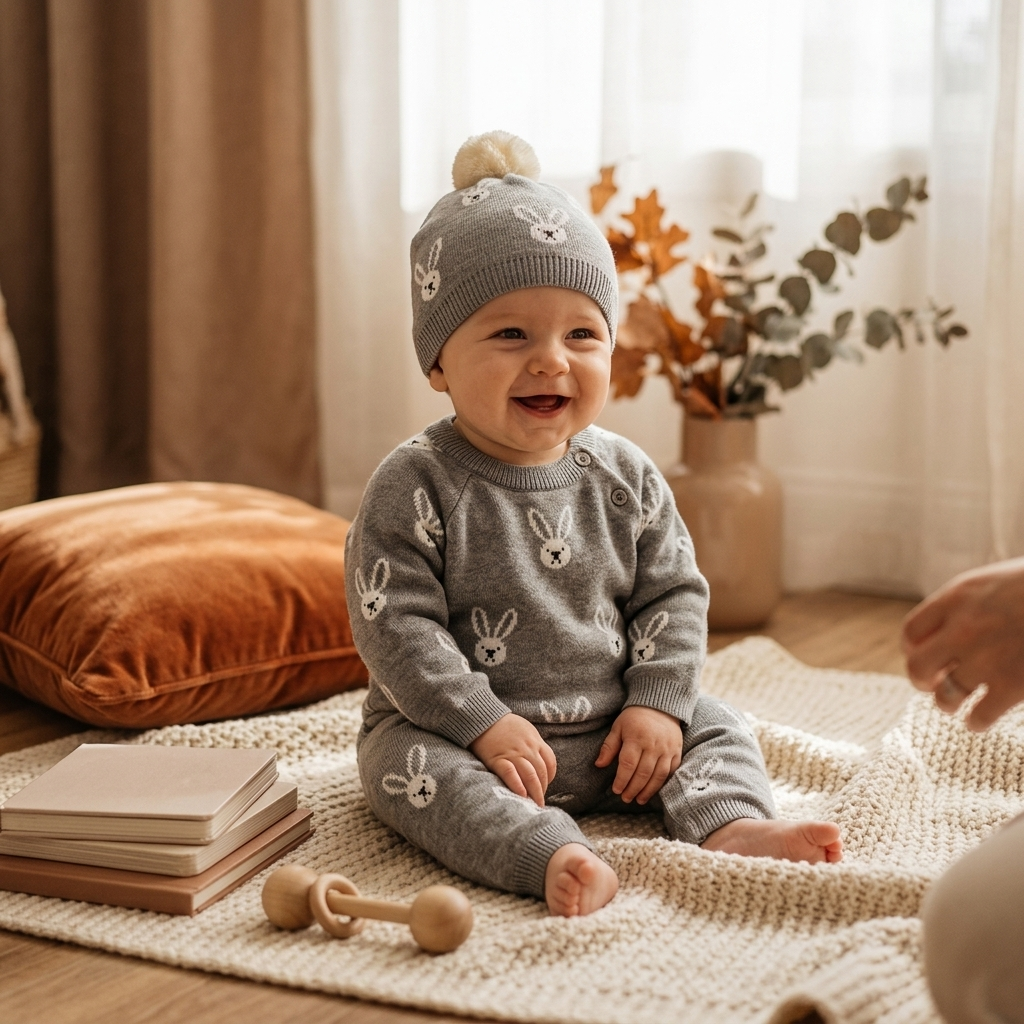
How the three layers work
Think of baby layering in three parts — you won't always need all three:
- Base layer — sits against the skin. A soft, breathable cotton bodysuit or romper. This layer wicks and breathes, so it should always be a gentle natural fibre.
- Mid layer — the warmth layer. A knit romper, cardigan, or sweater you add when it cools and remove indoors.
- Outer layer — the weather shield. A jacket, coat, or pramsuit for wind, rain, or cold outdoors.
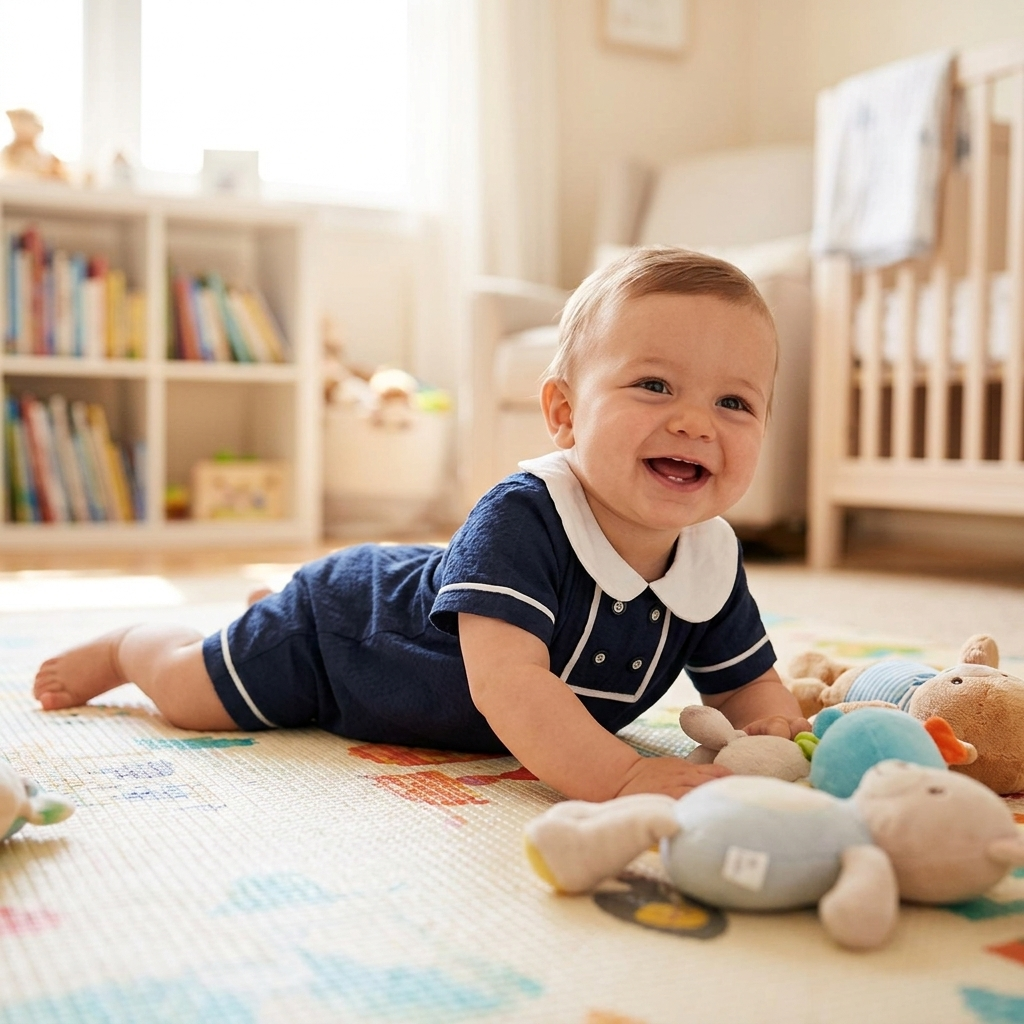
Layering by weather
Hot (24°C / 75°F and up)
Usually just the base layer: a single short-sleeve cotton bodysuit or romper. In real heat, less is more. Add a wide-brim hat for sun and keep baby in the shade. A thin muslin cloth over the pram (never touching the face, never fully covering it) helps with a breeze.
Mild (18–23°C / 64–73°F)
Base layer plus a light mid layer you can remove — a long-sleeve bodysuit with a thin cardigan, or a knit romper on its own. This is the easiest range to over-dress, so keep the mid layer removable.
Cool (10–17°C / 50–63°F)
All three, lightly: a cotton base, a knit mid layer, and a light jacket outdoors. Add socks and a hat when you head out. Our guide to dressing baby for autumn goes deeper on this range.
Cold (under 10°C / 50°F)
Base, a warm mid layer, and a proper insulated outer layer for outdoors, plus hat, mittens, and warm socks or booties. For picking the right coat, see our guide on how to choose baby outerwear.
Car seat safety: never layer under the harness
Bulky coats and snowsuits should never go under a car seat harness — they compress in a crash and leave the straps dangerously loose. Buckle baby in their base and mid layers, tighten the harness, then lay a coat or blanket over the top. This one rule matters more than any other in cold weather.
Choose the right fabrics for each layer
The base layer does the most important job, since it's against delicate skin all day. Soft, breathable natural fibres regulate temperature best and are gentler on the skin. Well-made organic cotton baby clothes and breathable muslin are ideal here. Save the heavier, warmer materials for the mid and outer layers, where they sit away from the skin.
Keep it safe and simple
Whatever the weather, keep layers free of hood or neck drawstrings and loose decorations, and never add a hat for sleep (it's an overheating risk indoors). Our baby clothes safety guide covers the details. And if you're still building the basics you'll layer with, our checklist on how many baby clothes you actually need is a good place to start.
The takeaway
Great baby layering isn't about piling on clothes — it's about thin, adjustable layers you can add or remove as the day moves. Start with a breathable base, add warmth in the middle, shield against weather on the outside, and always check the back of the neck rather than the hands. Get that rhythm down and you'll keep your baby comfortable in any forecast.