

Buying baby clothes the right size sounds simple until you're holding a garment labeled "3 months" that looks identical to one labeled "6 months" from a different brand. Baby clothing sizing is notoriously inconsistent across manufacturers, and the age label is often the least reliable guide you have. Here's how to actually size baby clothes correctly — using measurements, not guesswork.
Why Baby Clothing Sizes Are Confusing
There is no universal standard for baby clothing sizing. Each brand uses its own measurements, and the age label reflects their interpretation of what a baby of that age typically measures. A "3M" garment from one brand may fit the same as a "6M" from another. This is why parents often find that babies "skip" sizes or outgrow some sizes almost immediately while others last months.
The solution: always check the weight and height measurements on the label, not just the age range.
Newborn Clothes Size Chart
| Size Label | Weight Range | Height Range | Typical Age |
|---|---|---|---|
| Premature / Preemie | Under 5 lbs | Under 17" | Premature births |
| Newborn (NB) | 5–8 lbs | 17–21" | 0–1 month |
| 0–3 Months | 8–12 lbs | 21–24" | 0–3 months |
| 3–6 Months | 12–16 lbs | 24–27" | 3–6 months |
| 6–9 Months | 16–20 lbs | 27–29" | 6–9 months |
| 9–12 Months | 20–23 lbs | 29–31" | 9–12 months |
| 12–18 Months | 23–27 lbs | 31–33" | 12–18 months |
| 18–24 Months | 27–30 lbs | 33–35" | 18–24 months |
| 2T | 28–32 lbs | 34–37" | 2 years |
| 3T | 32–36 lbs | 37–40" | 3 years |
How to Measure Your Baby for Clothes
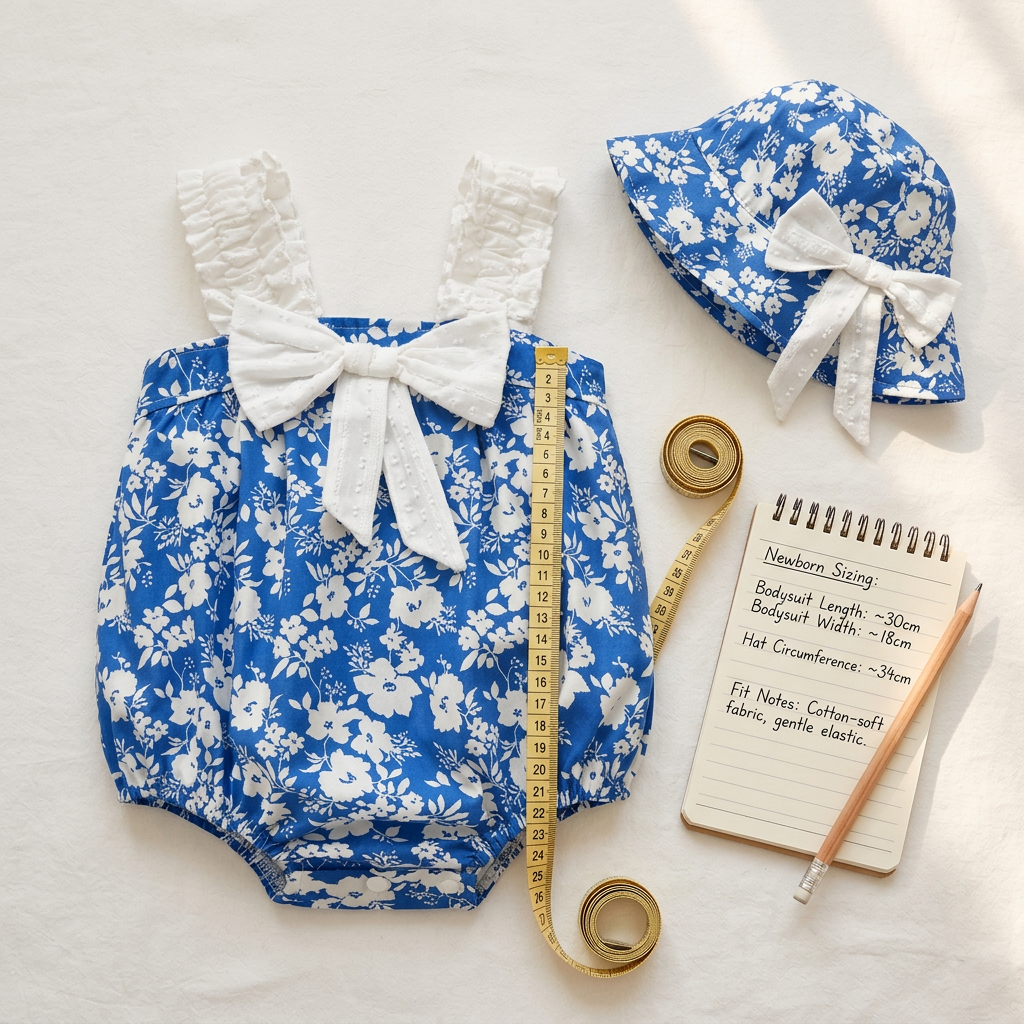
You need two measurements: weight (from their last pediatric visit or a home scale) and height/length (measure lying flat from crown to heel with a soft tape measure).
When the two measurements suggest different sizes, go with the larger. If baby is between sizes, size up — a slightly large garment still works; a too-small one doesn't.
The Snap-Crotch Rule
Onesies and bodysuits have a practical advantage: the snap crotch can be left open if baby is long but not yet heavy enough for the next size. This buys several extra weeks of wear from garments that would otherwise be too short.
What Size to Buy as Gifts
If you're buying baby clothes as a gift and don't know the baby's measurements, default to 0–3M or 3–6M. Never buy newborn — it's the most over-gifted size and the least useful, as many babies skip it entirely. For new parent gift ideas that actually get used, sizing up is always the safer choice.
Sizing Tips by Garment Type
- Onesies/bodysuits: Snap crotch gives flexibility. Match to weight.
- Sleepers/footies: Match to height — feet must fit without scrunching toes.
- Dresses: Match to height. Too short doesn't matter; too narrow does.
- Outerwear: Size up by one. Needs to go over layers.
- Shoes: Always measure the actual foot. See our baby shoe guide for detailed sizing.
Shop True-to-Size Baby Clothes at Mimou
All Mimou products include a clear weight and height range on the label. Our organic cotton garments are cut to run true-to-size with enough room for comfortable layering — no guessing required. Browse the full size guide or shop the collection.