


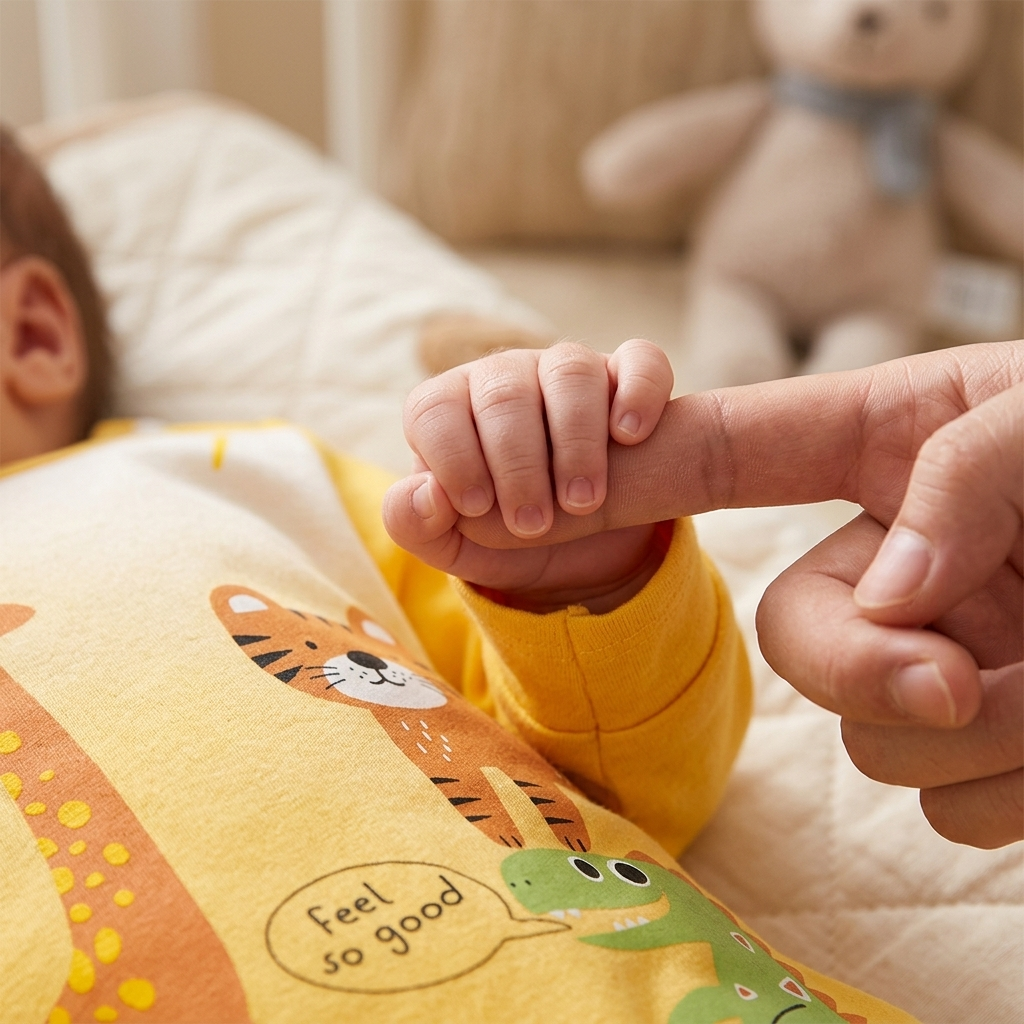
Hold out a finger to a newborn and their hand closes around it with a grip so surprisingly strong it feels deliberate — like they're choosing to hold on. They're not, not exactly. That grip is one of a remarkable set of automatic, hardwired behaviours that every healthy baby is born with: the newborn reflexes. They're involuntary, they're universal, and they're one of the first things a pediatrician checks, because the presence, strength, and eventual disappearance of these reflexes is a window into how a baby's nervous system is developing.
They're also genuinely fascinating to watch once you know what you're looking at. Here's a guide to the primitive reflexes — what each one does, why it exists, and when it fades.
What Newborn Reflexes Are (and Why They Matter)
Primitive reflexes are automatic motor responses that originate in the brainstem — the most primitive part of the brain — and don't require conscious thought or learning. They're present at birth (some develop in the womb) and most disappear within the first 4–6 months as the higher brain matures and takes over voluntary control of movement.
Their developmental significance runs in both directions. Their presence at birth signals a healthy, intact nervous system. And their disappearance on schedule signals that the brain is maturing properly — a reflex that lingers too long, or is absent when it should be present, can be an early flag a pediatrician will want to investigate. This is exactly why reflexes are tested at newborn checks.
The Key Newborn Reflexes
The Moro (Startle) Reflex
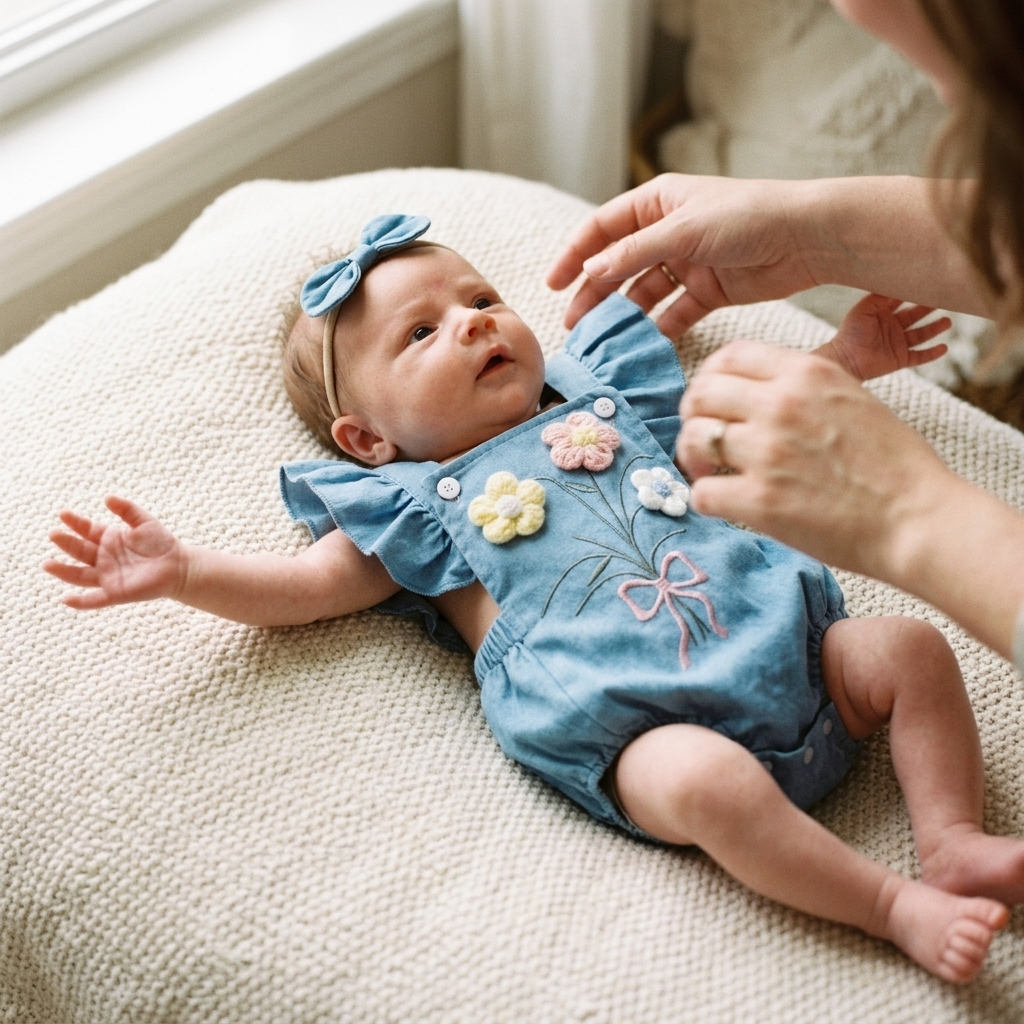
The most dramatic one. When a baby feels a sudden loss of support, a loud noise, or a jolt, they fling their arms and legs out, splay their fingers, arch slightly, and then pull everything back in — often with a cry. It looks like a full-body startle, because it is one.
Its likely evolutionary purpose was to help an infant grab onto a caregiver when falling. It's present from birth and typically fades by 2–4 months. The Moro reflex is also why swaddling is so soothing — it gently contains the arms and prevents babies from startling themselves awake. Our swaddling guide explains the technique and when to stop.
The Rooting Reflex
Stroke a newborn's cheek and they turn their head toward the touch, mouth opening, searching. This is rooting — the reflex that helps a baby find the breast or bottle to feed. It's fundamental to feeding in the early weeks and usually fades by around 4 months, by which time feeding has become a more deliberate, learned act. Understanding rooting helps with latch; see our breastfeeding positions guide.
The Sucking Reflex
Closely tied to rooting: when the roof of the mouth is touched, a baby begins to suck. It actually develops in the womb (around 32 weeks' gestation, which is why very premature babies sometimes can't yet coordinate it) and is essential for feeding. It gradually comes under voluntary control over the first months. Non-nutritive sucking — on a pacifier or finger — draws on the same reflex; see our pacifier guide.
The Palmar Grasp Reflex
The finger-grip described at the start. Press a finger into a newborn's palm and their fingers curl tightly around it. Present from birth, it fades by around 5–6 months, giving way to the voluntary, deliberate grasping that lets a baby reach for and hold toys on purpose. There's a foot version too — the plantar grasp — where the toes curl when the sole is pressed.
The Stepping Reflex
Hold a newborn upright with their feet touching a flat surface and they'll make little stepping movements, as if trying to walk. It's a striking thing to see in a baby months away from actual walking. It typically disappears by around 2 months, then re-emerges as genuine, voluntary walking much later. It's thought to reflect the early neural wiring for locomotion.
The Tonic Neck Reflex (the "Fencing" Reflex)
When a baby's head turns to one side while lying on their back, the arm on that side extends while the opposite arm bends up at the elbow — a posture that looks oddly like a fencer's stance. It's present from birth to around 5–7 months and is thought to help prepare for hand-eye coordination and reaching.
The Babinski Reflex
Stroke the sole of the foot from heel to toe and the big toe bends up and back while the other toes fan out. Named after the neurologist Joseph Babinski, this reflex is normal in babies and usually disappears by around 12–24 months. Interestingly, its presence in an older child or adult can indicate a neurological issue — but in a baby, it's exactly what should happen.
A Quick Reference
| Reflex | What it does | Usually fades by |
|---|---|---|
| Moro (startle) | Flings arms out at sudden movement/noise | 2–4 months |
| Rooting | Turns toward cheek touch to feed | ~4 months |
| Sucking | Sucks when roof of mouth touched | Becomes voluntary ~2–4 months |
| Palmar grasp | Grips object placed in palm | 5–6 months |
| Stepping | ‘Walks’ when held upright on a surface | ~2 months |
| Tonic neck (fencing) | ‘Fencer’ pose when head turns | 5–7 months |
| Babinski | Big toe bends up when sole stroked | 12–24 months |
When to Mention Reflexes to Your Doctor
Reflexes are checked at routine newborn and well-baby visits, so most concerns are caught without you needing to do anything. That said, mention it to your pediatrician if you notice: a reflex that seems clearly absent on one side but present on the other (asymmetry can matter), reflexes that appear unusually weak or excessively strong, or primitive reflexes that persist well beyond their expected window. These don't necessarily mean a problem — but they're worth a professional look.
For the most part, though, newborn reflexes are simply one of the quiet marvels of those early weeks: a brand-new nervous system, fully equipped from day one with everything it needs to grab on, find food, and brace against a fall. For what comes next developmentally, see our first-year milestones guide and our tummy time guide, where voluntary movement begins to take over.