


Teething symptoms are one of the most misattributed phenomena in early parenthood. Parents and caregivers routinely credit teething with causing a wide range of symptoms — many of which the evidence doesn't support. At the same time, the symptoms that teething genuinely does cause are real, uncomfortable, and deserve practical management. Here's the clear, evidence-based breakdown.
Why Teething Symptoms Are Misunderstood
Teething begins around 4–7 months and continues, tooth by tooth, until around age 3. This period overlaps almost perfectly with:
- The end of maternal antibody protection (making babies more susceptible to viral illness)
- The introduction of solid foods (increasing GI system demands)
- The beginning of daycare and group settings (increased pathogen exposure)
- A developmental phase where babies put everything in their mouths (increasing both pathogen and allergen exposure)
The result: any illness or change in behavior that happens during the teething years tends to get attributed to teething, regardless of the actual cause. The correlation is coincidental; the causation is usually something else.
Real Teething Symptoms: What the Evidence Actually Shows
The most rigorous research on teething symptoms — including the ORBD study that tracked 125 children through every individual tooth eruption, rating symptoms daily — identified the following as genuinely and consistently associated with tooth eruption:
Drooling
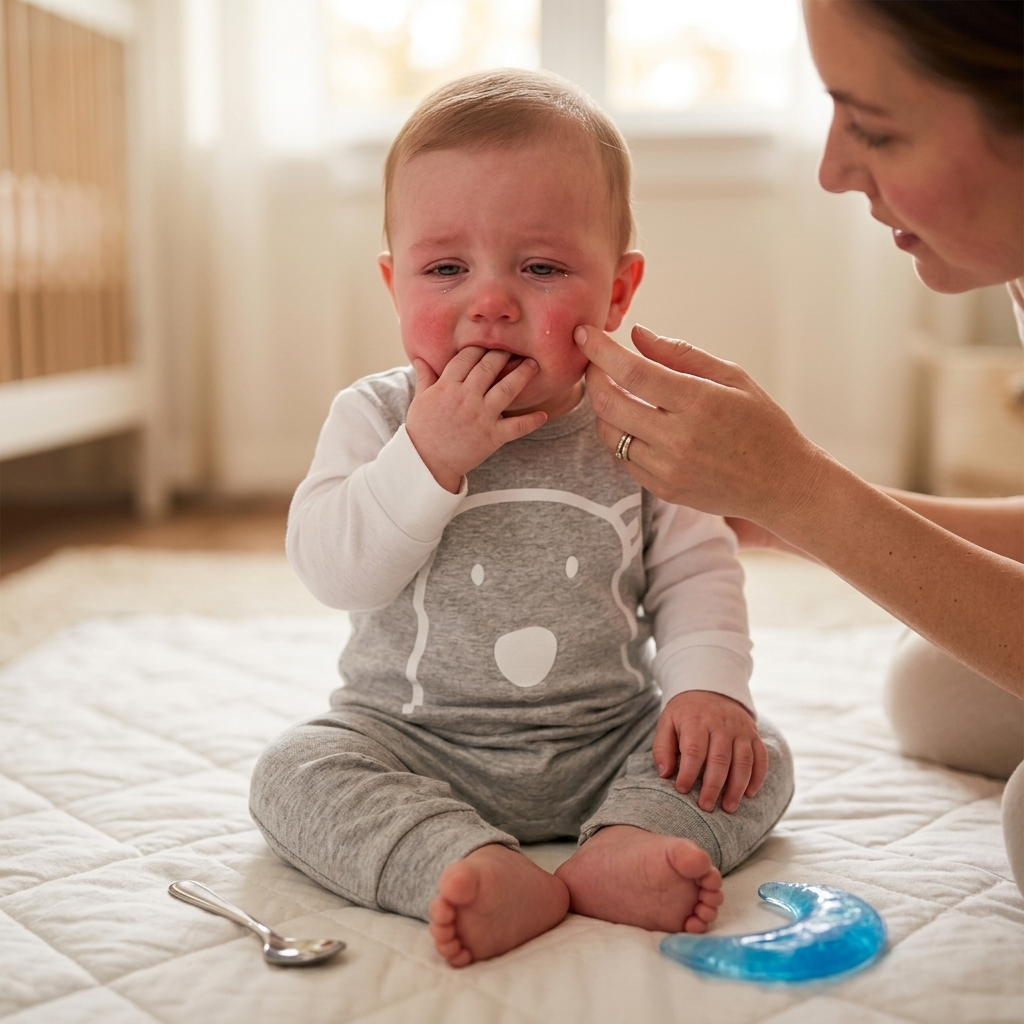
The most consistent teething symptom and often the first to appear — sometimes weeks or months before any tooth erupts. Salivary gland activity increases substantially during this developmental period. The amount can be dramatic: bibs, burp cloths, and bodysuit changes increase significantly. A drool rash on the chin and cheeks (redness and mild roughness from skin-to-saliva contact) is a common secondary effect.
Increased Biting and Mouthing
Counter-pressure on inflamed gum tissue provides temporary relief. Babies chew on everything — fingers, toys, teething rings, caregivers' fingers — and the biting force can be surprisingly strong even before teeth appear. This is a reflex-driven behavior, not something babies can or should be discouraged from.
Gum Swelling and Redness
The gum tissue overlying an erupting tooth becomes visibly swollen, darker pink or red, and firm to the touch. In the days immediately before a tooth breaks through, you may see a bluish fluid-filled bump (an eruption cyst) — this is harmless and resolves on its own as the tooth erupts.
Irritability and Disrupted Sleep
Gum discomfort peaks in the 3–4 days surrounding each eruption — typically 1–2 days before and 1–2 days after the tooth appears. Molar eruptions (beginning around 13–19 months) consistently produce more significant irritability than incisors because of the larger surface area involved.
Reduced Appetite for Solids
Chewing is uncomfortable when gums are tender. Babies may refuse foods they normally accept. Softer foods and cold purees are generally better tolerated during active teething periods.
Slightly Elevated Temperature
Core body temperature may rise very slightly during tooth eruption — but the evidence shows this elevation stays below 38°C (100.4°F). Anything at or above this threshold is a fever caused by something other than teething.
Symptoms That Are NOT Caused by Teething
Fever (above 38°C / 100.4°F)
This is the most important myth to dispel. True fever — a temperature at or above 38°C rectally — is not caused by teething. If a teething baby has a fever, look for another cause: ear infection, roseola, viral illness. Attributing fever to teething and not investigating further is a genuine clinical risk.
Diarrhea
Not supported by controlled research. The perceived correlation exists because teething babies put more objects in their mouths (increasing pathogen exposure) and because the teething age overlaps with dietary changes. Significant diarrhea in a teething baby should be investigated, not attributed to teething.
Ear Pulling
Teething pain does not radiate to the ear. Ear pulling in a teething baby more commonly indicates an ear infection, which is common in this age group, or simply curiosity about a body part they've recently discovered.
Widespread Body Rash
A drool rash localized to the chin and cheeks is real and teething-related. A rash on the trunk, limbs, or elsewhere is not — roseola (which causes a distinctive rash as fever resolves) is common in this age group and is sometimes mistakenly attributed to teething.
Significant Illness
A baby who appears genuinely unwell — high fever, sustained inconsolable crying, difficulty breathing, refusing all feeds, significant lethargy — needs medical evaluation regardless of whether teeth are coming in. "It's just teething" is not an appropriate explanation for a sick baby.
Effective Teething Relief
- Chilled teething ring: Refrigerated (not frozen) silicone ring provides counter-pressure and mild cold numbing. Cold amplifies the pressure-relief mechanism.
- Cold washcloth: Wet, wrung out, chilled for 15 minutes. The texture and temperature together work well for many babies.
- Gum massage: Clean finger pressed firmly against swollen gum tissue. The same counter-pressure mechanism as biting, delivered in a controlled way.
- Cold food: For babies on solids, cold purees, chilled yogurt, or refrigerated cucumber sticks provide both nutrition and relief.
- Infant paracetamol or ibuprofen: The most effective options for significant discomfort. Use age-appropriate dosing and consult your pediatrician. Ibuprofen from 6 months only.
What to Avoid
- Benzocaine gels (Orajel Baby): FDA warns against use in children under 2 due to methemoglobinemia risk
- Amber teething necklaces: No evidence of effectiveness; genuine strangulation and choking hazard
- Homeopathic teething tablets: Multiple brands recalled for inconsistent belladonna content
- Frozen teething rings: Ice-hard surfaces can damage delicate gum tissue
For the complete teething timeline including when each tooth type typically erupts, see our guide on when babies start teething. For the broader development context at this age, see our baby milestones by week guide.