


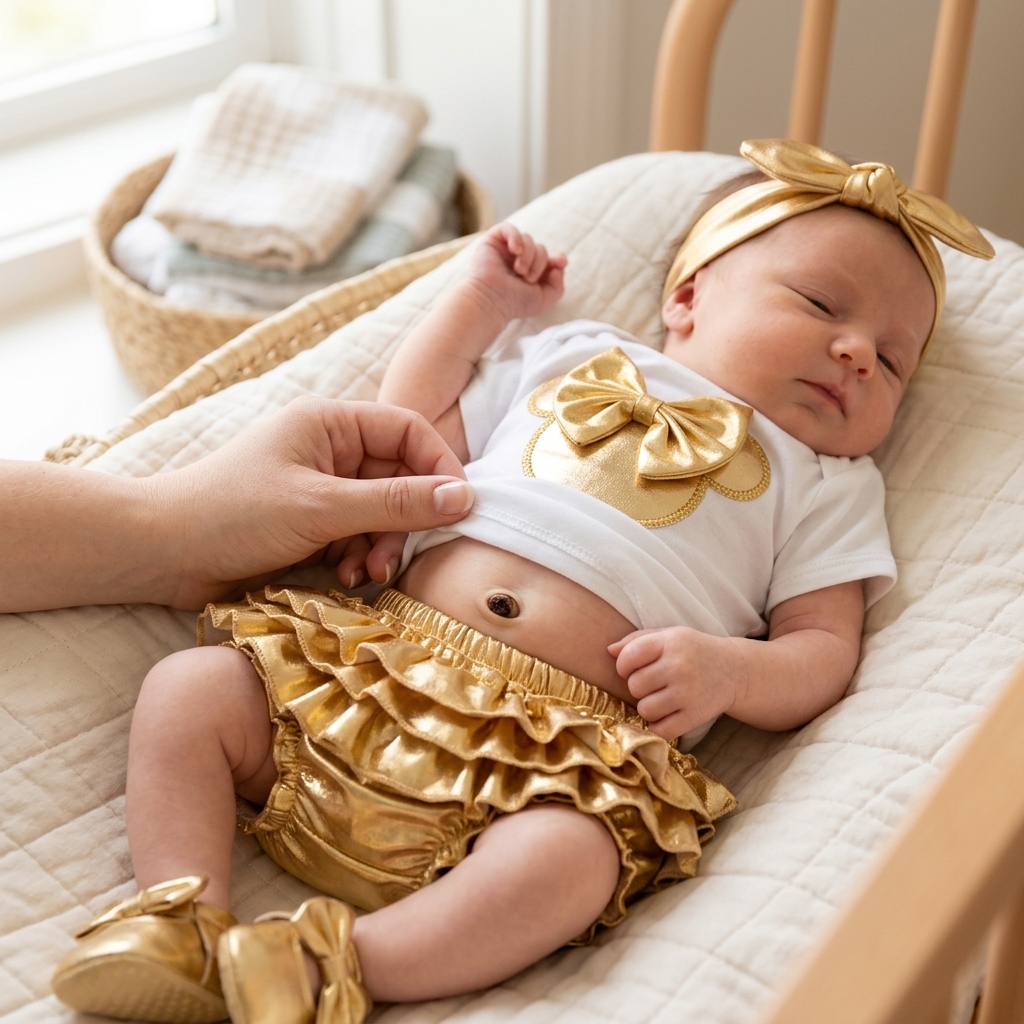
The umbilical cord stump is one of the aspects of newborn care that surprises first-time parents most — it looks fragile, it requires some attention, and the question of when it falls off is one most parents check far more often than they expected. Here's everything you need to know: what's normal, how to care for it, and what to watch for.
When Does the Umbilical Cord Fall Off?
The umbilical cord stump typically falls off between 1 and 3 weeks after birth, with the average being around 10–14 days. Some stumps fall off as early as 5 days; others take up to 4–5 weeks. The variation is normal and doesn't indicate anything about the baby's health.
What matters more than timing is the progression: the stump should gradually change color from yellow-green to brown to black as it dries and shrivels. A stump that progresses through this sequence — even if slowly — is healing normally.
How to Care for the Umbilical Cord Stump
Current guidance from the AAP (American Academy of Pediatrics) recommends dry cord care — meaning leaving the stump completely alone and allowing it to dry naturally. This replaced older advice about swabbing with alcohol, which studies found delayed healing rather than accelerating it.
- Keep it dry: Pat the area dry after baths. Don't submerge baby in water until the stump has fallen off and the navel is fully healed.
- Fold diapers below it: Fold the front of the diaper down to keep urine away from the stump. Many newborn diapers have a pre-cut notch for this purpose.
- Dress in loose-fitting clothes: Soft bodysuits that don't press against the navel are ideal. Avoid anything tight around the midsection.
- Sponge baths only: Until the stump falls off, keep bath time to gentle sponge baths rather than immersion.
- Leave it alone: Don't pull, tug, or try to remove the stump. It will detach on its own when it's ready.
What's Normal vs. What's Not
Normal:
- Color changing from yellow-green to brown to black over days to weeks
- The stump gradually shriveling and hardening
- A small amount of dried blood at the base when it falls off
- A small raw-looking area at the navel immediately after the stump detaches (heals within a few days)
Call your pediatrician if:
- The skin around the base of the stump is red, warm, or swollen
- There is yellow or green discharge with a foul smell (not just a faint odor)
- Baby has a fever above 100.4°F (38°C)
- The stump appears to bleed actively (a spot of dried blood is normal; flowing blood is not)
- The stump has not fallen off after 6 weeks
What to Wear During the Umbilical Cord Stage
Clothing choice matters more than many parents realize during this stage. The best options:
- Bodysuits with snap crotch: These sit naturally at or above the navel without pressure. The snap closure makes diaper changes easy without pulling anything tight.
- Loose kimono-style tops: Wrap-front styles that tie at the side rather than pulling over the head create zero contact with the navel area.
- Avoid waistbands: Pants, leggings, or anything with an elastic waistband that sits at navel height can rub the stump. If dressing in pants, fold the waistband down below the navel.
For a full guide to what to dress newborns in during this stage and beyond, see our baby necessities list and how to wash baby clothes guide.