

Few baby accessories spark as much confusion as the humble hat. Does your newborn really need one? When should they wear it, and when is it better to skip it? The short answer: hats have their moments — but there are important times a baby shouldn't wear one. Here's when a hat helps, when to leave it off, and how to choose a good one.
Why newborns are often given a hat
Babies lose a notable amount of heat through their heads, and newborns aren't yet great at regulating their own temperature. That's why hospitals often pop a hat on right after birth, when keeping a brand-new baby warm matters most. In the early days, a hat can help in cool conditions.
When a hat helps
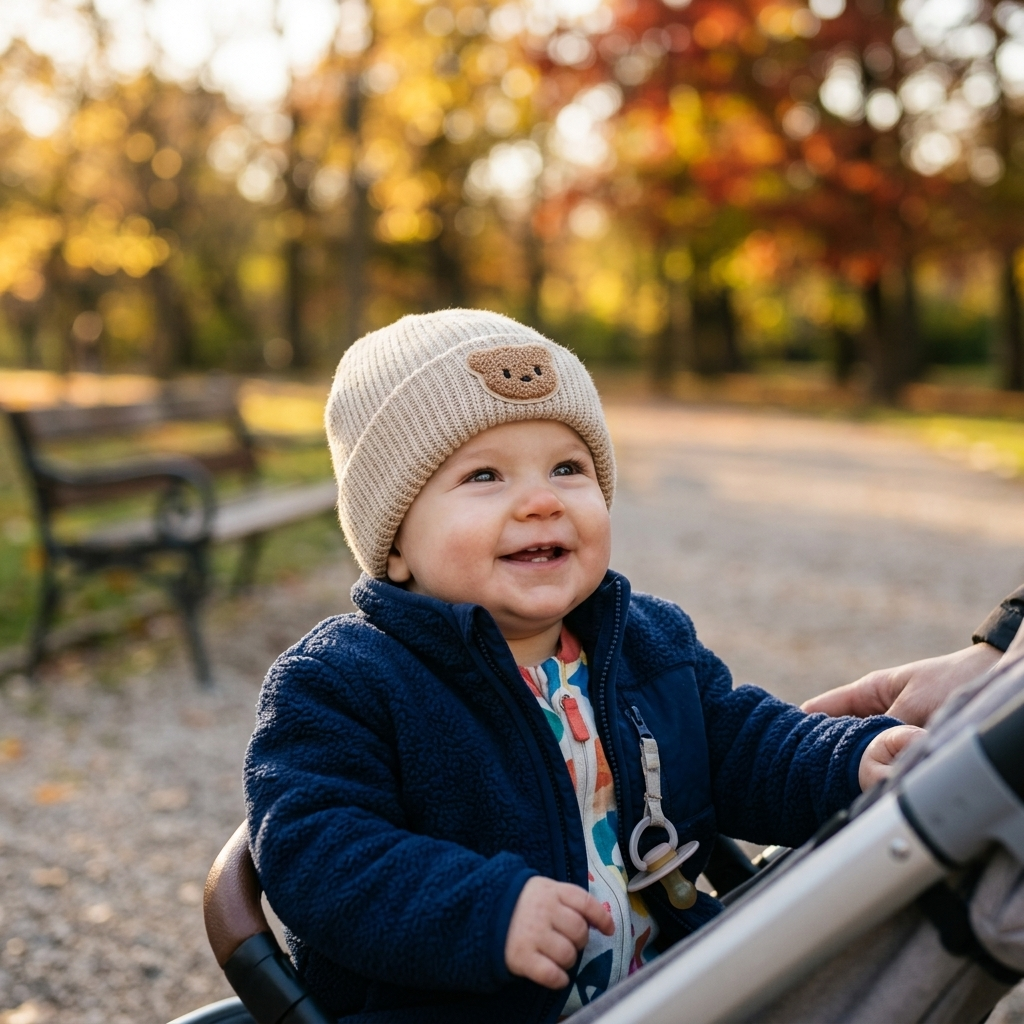
- Outdoors in the cold. A warm knit hat makes a real difference on chilly walks — often more than another body layer. It rounds out the cold-weather kit alongside a good coat or jacket.
- Out in the sun. A wide-brim sun hat shields a baby's delicate face, ears, and neck. See our baby sun protection guide for the full picture.
- Rounding out fall layers. On cool days, a hat is part of covering the extremities — our fall dressing guide covers how it fits with the rest.
When to skip the hat — important
Two situations matter for safety:
- Never for sleep. Healthy babies should not wear hats to sleep. Hats during sleep are linked to overheating and can be a safety risk, so keep the head uncovered for naps and nighttime. Our baby clothes safety guide covers safe-sleep dressing.
- Not indoors at a comfortable temperature. Once you're home in a normally warm room, a healthy full-term baby doesn't need a hat — leaving it on can cause overheating.
As always, if your baby is premature, unwell, or you've had specific guidance from a healthcare professional, follow their advice over general tips.
Types of baby hats
Match the hat to the job: soft knit beanies for cold-weather warmth, lightweight cotton hats for mild days and layering, and wide-brim sun hats for outdoor sun protection.
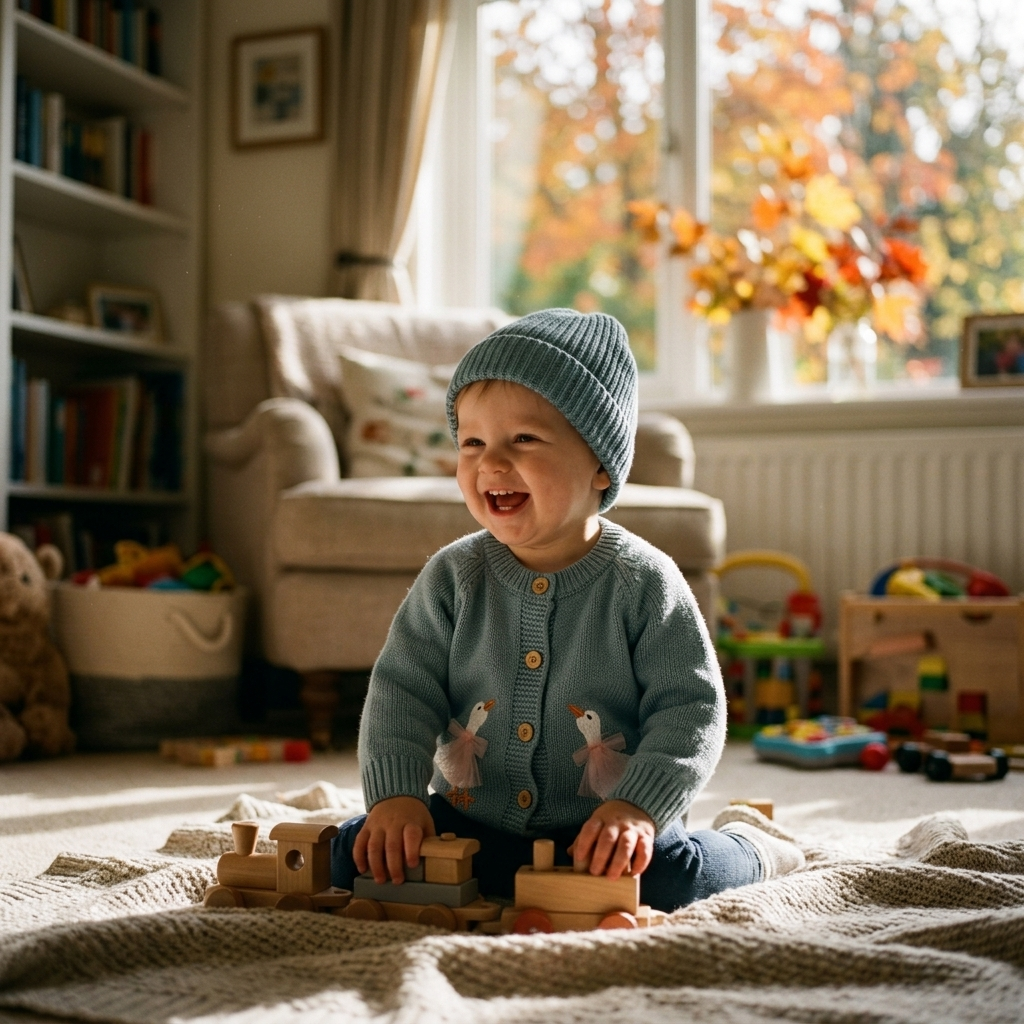
A warm knit hat like our Knitted Baby Beanie is the cold-day essential, while a coordinated piece like our Goose Embroidery Cardigan & Hat Set pairs a matching hat with a cozy layer.
How to choose a good baby hat
- Soft, breathable fabric. Gentle on delicate skin and less likely to cause overheating — natural fibres like those in our organic cotton baby clothes are a good bet for skin contact.
- Snug, not tight. It should stay on without leaving marks or pressing on the head.
- No hazards. Avoid ties or long strings near the neck, and check there are no small parts (pom-poms, appliqués) that could detach.
- Right size for age. Hats are usually sized by age or head circumference — measure if you're unsure, and size up as your baby grows.
Frequently asked questions
Do newborns need to wear hats? In cool conditions and right after birth, yes — but indoors at a comfortable temperature, a healthy full-term baby generally doesn't need one.
Can a baby sleep in a hat? No — healthy babies should not wear hats to sleep, due to the risk of overheating. Keep the head uncovered for naps and nighttime.
What size hat does my baby need? Go by age or, better, head circumference for a snug-not-tight fit, and size up as they grow.
The bottom line
A hat is a genuinely useful piece for cold walks, sunny outings, and a newborn's first chilly days — but not for sleep, and not indoors when it's already warm. Choose soft, breathable, well-fitting hats with no loose parts, match them to the weather, and your baby stays comfortable and protected whenever a hat truly helps.