


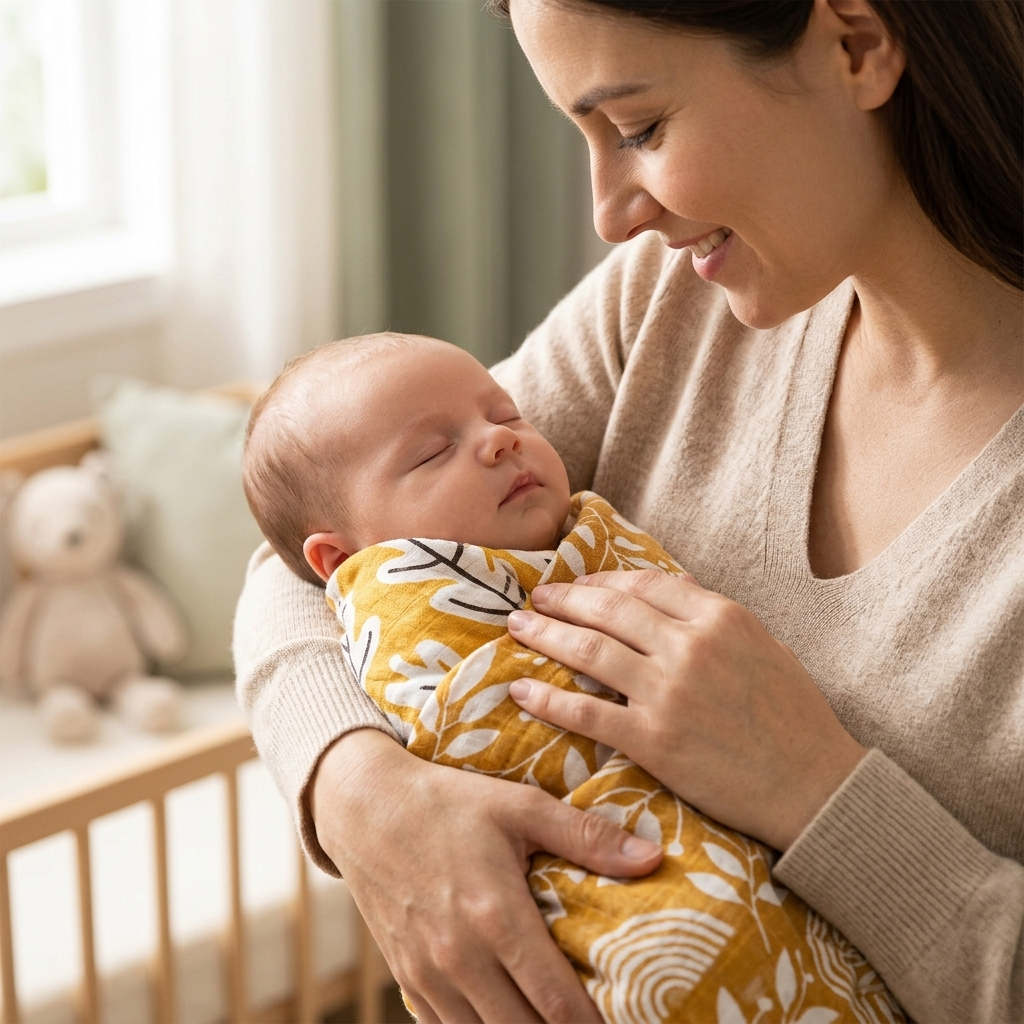
Swaddling is one of the oldest parenting techniques in the world, and for good reason: wrapping a newborn snugly can recreate the cosy, contained feeling of the womb, calm the startle reflex that jolts them awake, and help many babies settle and sleep. But a swaddle only works well — and safely — if it's done right. Too loose and it comes undone; too tight in the wrong place and it's unsafe for the hips. Here's a clear, step-by-step guide to swaddling a newborn, plus the safety rules that matter most.
Why Swaddle at All?
In the early weeks, most babies have a strong Moro (startle) reflex — they fling their arms out and wake themselves up. A swaddle gently contains that reflex, which can mean calmer settling and longer stretches of sleep. It also provides a comforting sense of security for a brand-new baby adjusting to the world. Not every baby loves it, but for many it's a genuine help in the newborn stage.
What You Need
A large, thin, breathable square blanket — a cotton muslin is ideal, because it's lightweight enough to avoid overheating, has enough give to wrap snugly, and is big enough to tuck securely. Our Botanical Print Muslin Swaddle is 100% cotton double gauze at a generous 120×110cm — the size matters, because a too-small blanket won't stay tucked (see our muslin swaddle buyer's guide).
How to Swaddle: Step by Step
- Lay the blanket in a diamond, fold the top corner down. Spread it on a flat surface with one corner pointing up, and fold that top corner down to make a straight edge.
- Place your baby on their back. Shoulders just below the folded edge, head above it.
- Straighten one arm and wrap that side across. Gently hold your baby's right arm down along their body, take the blanket from that same side, pull it snugly across their chest, and tuck the end under the opposite side of their body.
- Fold the bottom up. Bring the bottom corner up over the feet — loosely, so the legs and hips can still bend and move freely (this is the key hip-safety step).
- Wrap the second arm and side across. Straighten the other arm down, pull the remaining side snugly across, and tuck it around the back.
- Check the fit. Snug across the chest and arms, but loose around the hips and legs. You should be able to slip two or three fingers between the blanket and your baby's chest.
The Safety Rules That Matter Most
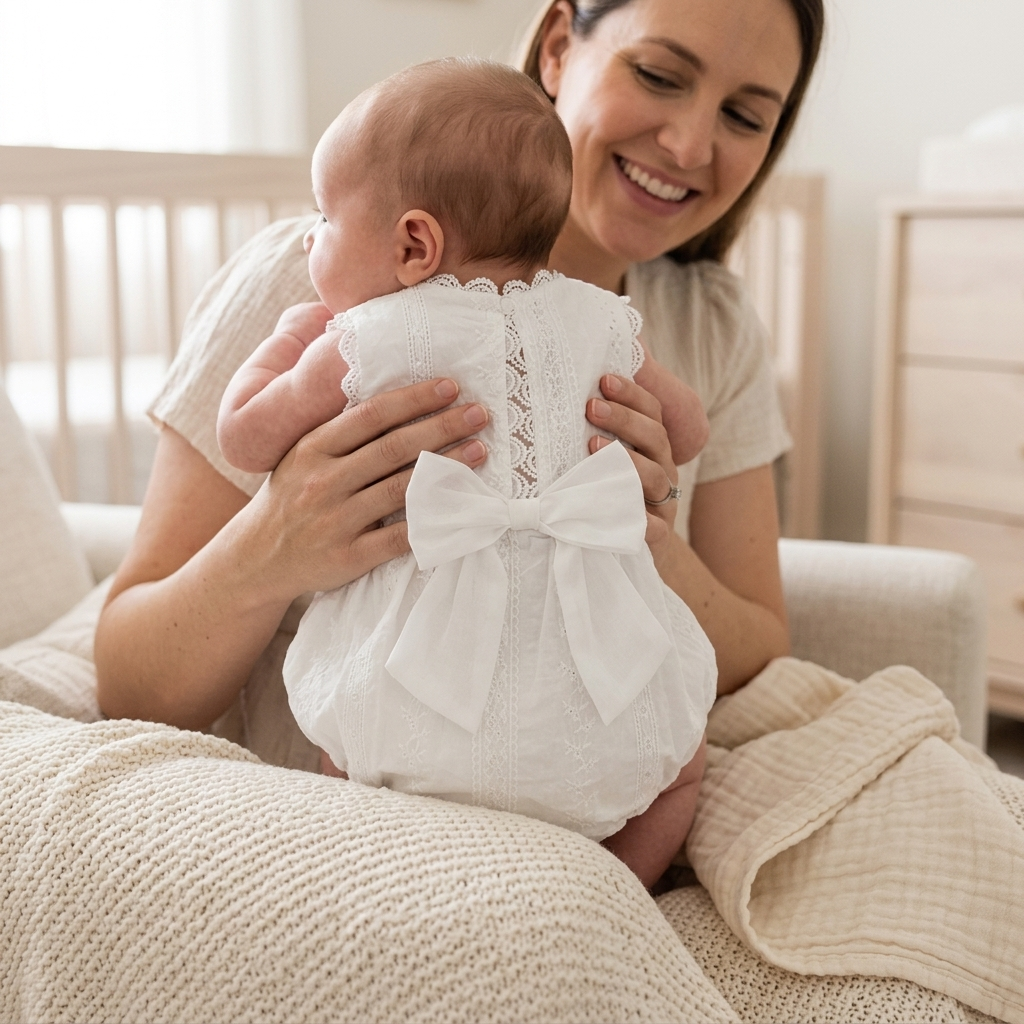
- Always place a swaddled baby on their back to sleep. Never on the side or front — this is the single most important rule.
- Stop swaddling as soon as your baby shows signs of rolling. Once a baby can roll (often around 2–4 months), a swaddle becomes unsafe because they could roll onto their front and be unable to reposition. Transition to a sleep sack.
- Keep it loose at the hips. Legs must be able to bend up and out; a tight, straight-legged swaddle is linked to hip dysplasia. Snug on top, roomy at the bottom.
- Don't overheat. Use a light, breathable fabric and check your baby isn't too warm — feel the back of the neck (see our sleepwear guide).
- Not too tight across the chest. Your baby needs room to breathe easily — the two-to-three-finger check confirms it.
These reflect long-standing guidance from paediatric and safe-sleep authorities; if in doubt, your health visitor or paediatrician can show you in person.
When to Stop Swaddling
Most babies are ready to move on from swaddling somewhere around 2–4 months — and the trigger is rolling, not a fixed age. As soon as your baby shows any sign of trying to roll, it's time to transition, usually to a sleeveless sleep sack that keeps the cosy feeling without restricting the arms. Some babies drop the swaddle happily; others need a gradual transition (one arm out first, then both).
The Bottom Line
Swaddling can be a wonderful tool in the newborn weeks: wrap snugly across the chest and arms but loose at the hips, always place your baby on their back, use a light breathable muslin to avoid overheating, and stop as soon as they show signs of rolling. Done right, it helps a brand-new baby feel secure and settle — and a good muslin makes it easy.
Shop our Botanical Muslin Swaddle, browse more soft muslin in the collections, and see our muslin edit for everything else the fabric does. This article is general information, not medical advice — always follow current safe-sleep guidance and your health professional.