


Those tiny shoes in the baby aisle are almost impossibly cute—but when does your baby actually need a pair? The short version: real shoes come much later than most people expect, and for good reason. Here's a simple, stage-by-stage guide to when babies can wear shoes, and what to put on those little feet before then.
Before walking: bare feet are best
For non-walking babies, the honest answer is that they don't need shoes at all. Bare feet (or soft socks and booties) are actually best for early development—feeling the ground helps babies build balance, strength, and coordination. Stiff shoes at this stage do nothing useful and can get in the way. Save them for later.
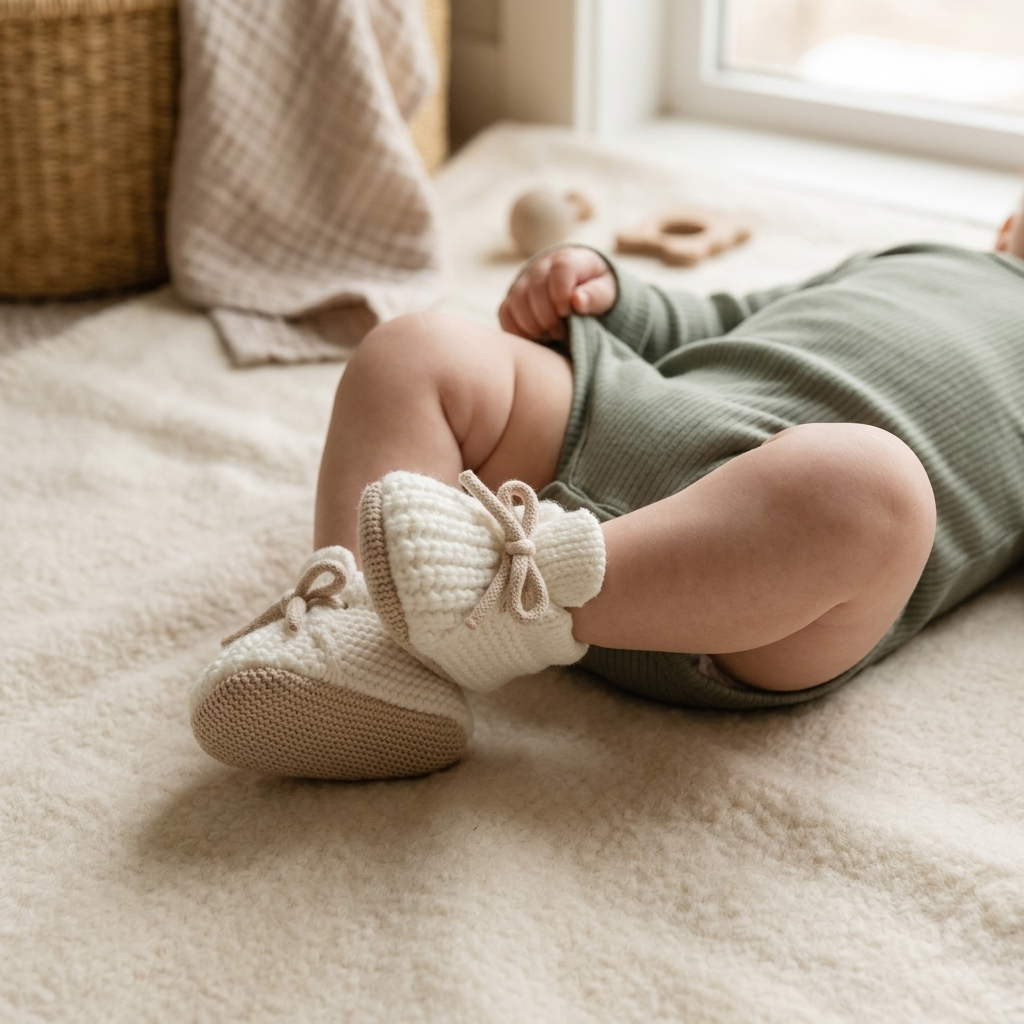
What to put on their feet before walking
Shoes aren't needed, but warmth and grip sometimes are. Good options for the pre-walking stage:
- Socks for everyday warmth indoors.
- Soft booties or knit prewalkers for a little extra cosiness, especially in cooler months.
- Non-slip socks or soft-soled booties once your baby starts crawling and pulling up, for grip on smooth floors.
The key word is soft: nothing rigid, nothing that squeezes. For keeping those socks and booties on wriggly feet, see our guide on how to keep baby socks on.
First walking: soft-soled shoes
Once your baby is walking confidently—usually somewhere between 9 and 18 months, though every baby is different—it's time for their first real shoes. But even now, softer is better. Look for lightweight, flexible, soft-soled shoes that let the foot bend and flex naturally, close to a barefoot feel. The main reason for shoes at this stage is simply protection when walking outdoors.
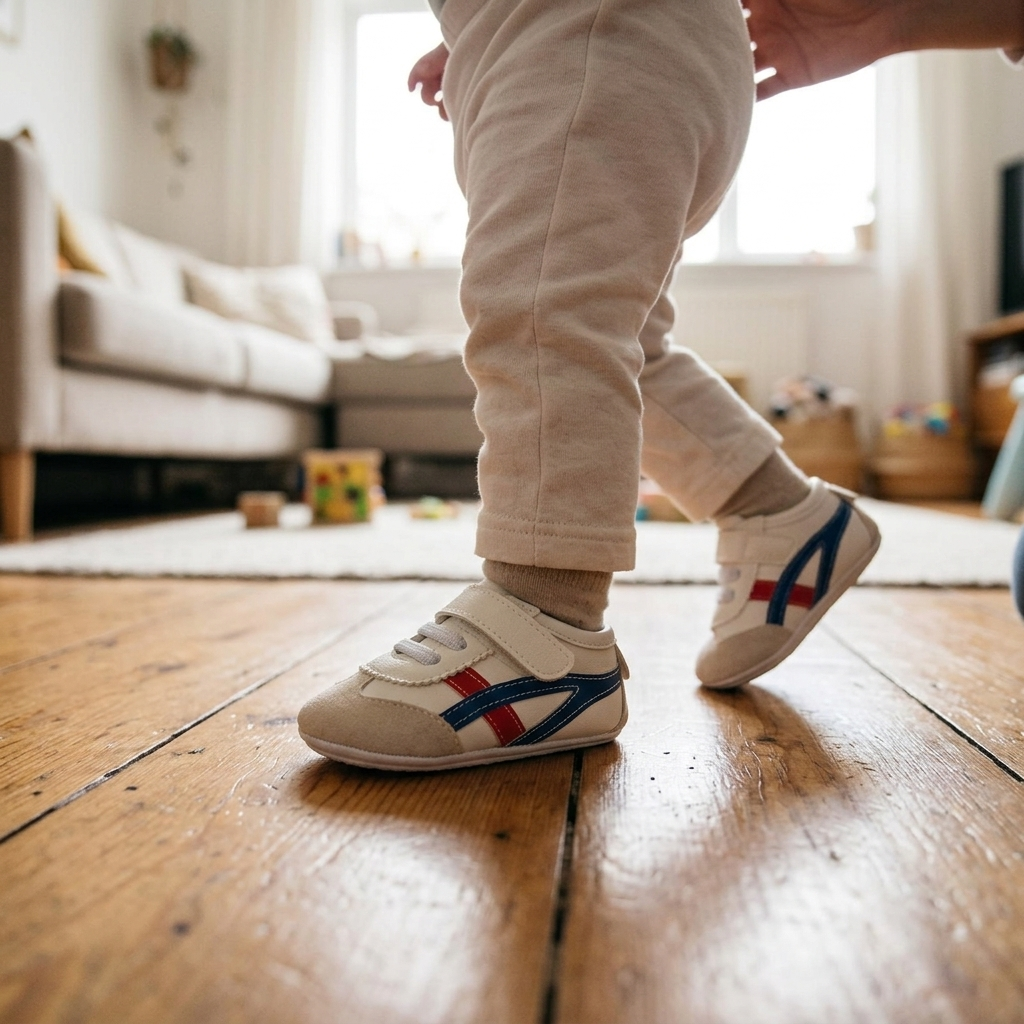
Indoors, keep letting them go barefoot
Even after your baby starts walking, barefoot indoors is still ideal whenever it's safe and warm enough. It keeps building those foot muscles and balance. Reserve shoes mainly for outside, rough surfaces, or cold ground—not for padding around the living room.
What to look for in a baby's first shoes
- Soft, flexible sole you can easily bend—avoid stiff, thick soles.
- Lightweight and breathable materials like cotton, canvas, or soft leather.
- Roomy toe box so toes can spread and wiggle.
- Secure but gentle fastening (a strap or elastic) to keep them on without squeezing.
- The right size—measure rather than guess, and leave a little growing room. Our baby shoe size guide shows you how, and our guide to choosing baby's first shoes goes deeper.
The takeaway
Babies don't need shoes until they're walking—usually around 9 to 18 months—and before then, bare feet, socks, and soft booties are best for healthy development. When shoes do come, choose soft, flexible, lightweight styles for protection outdoors, and keep letting those little feet go barefoot at home. For soft booties, prewalkers, and gentle everyday basics, browse our organic cotton baby clothes.