


If a baby's first smile is one of the most anticipated moments of early parenthood, the first laugh might be even better. That full-body, helpless, completely genuine sound of joy — usually arriving somewhere between 3 and 4 months — has a way of making every difficult night feel worth it. Here's everything you need to know about when babies start laughing, what triggers it, and why it matters far beyond the obvious.
When Do Babies Start Laughing? The Timeline
Most babies produce their first real laugh between 3 and 4 months, though the normal range extends from as early as 2 months to as late as 5 months. The laugh that emerges at this stage is typically a soft chuckle rather than the full belly laugh parents imagine — the robust, sustained laughing that most people picture develops closer to 4–6 months as the baby's core muscles and breath control improve.
What Comes First: Smiling or Laughing?
Always smiling. The social smile (6–8 weeks) precedes laughing by roughly 6–8 weeks and is the developmental prerequisite for it. If your baby is laughing, they were already smiling. If your baby is smiling but not yet laughing, laughing is coming within a few weeks. For the full smiling timeline, see our guide on when babies start smiling.
What Triggers a Baby's First Laugh
Laughter in infants is triggered by a specific category of experience: mild surprise within a safe context. The baby's nervous system is learning to distinguish threatening from non-threatening stimuli, and laughter is the response to things that initially look surprising but resolve as safe and familiar. This is why the most reliable laugh triggers share a common structure:
- Peekaboo: The original baby comedy. A face disappears (mild surprise) and reappears (safe resolution). By 4–6 months this consistently produces laughter, and it remains effective for years.
- Tickling: Gentle, unexpected touch that resolves into contact with a trusted person. Most effective in the soft spots — neck, tummy, under the arms, feet.
- Funny sounds: Raspberries, squeaky voices, exaggerated animal sounds. The unpredictability of these sounds within a safe, familiar interaction triggers the surprise-to-laughter response.
- Physical play: Gentle bouncing, airplane holds, being swooped up and down. The movement is unpredictable but safe, which is exactly the formula.
- Familiar people being unexpected: Baby laughs hardest at the people they know best doing things that seem out of character — a parent making a ridiculous face is funnier than a stranger making the same face because the contrast is greater.
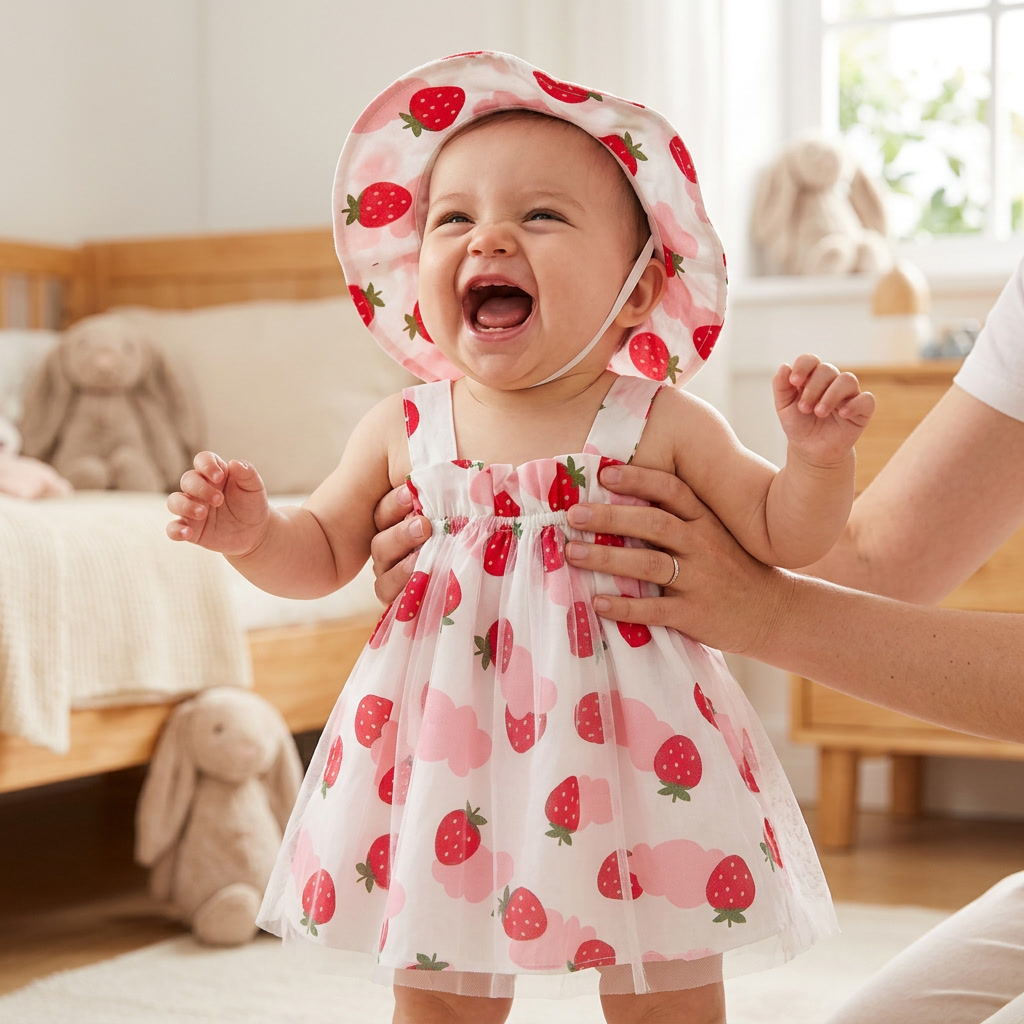
The Science of Baby Laughter
Laughter in human infants is produced by the same neural circuits that produce laughter in great apes — it's one of our oldest social behaviors, predating speech by millions of years. In babies, laughter serves multiple developmental functions simultaneously:
- Social bonding: Shared laughter strengthens the attachment between baby and caregiver. The neurochemical response to shared laughter (oxytocin, dopamine) is similar in both parties.
- Risk calibration: Laughter is the brain's signal that something surprising was ultimately safe. Repeated experiences of surprise-to-laughter help the developing nervous system calibrate what is and isn't a genuine threat.
- Cognitive development: Peekaboo, the most classic laugh trigger, requires the development of object permanence — understanding that a hidden thing still exists. Laughing at peekaboo is evidence that the concept is emerging.
- Physical development: Full laughing requires control of breathing and the diaphragm — the same muscles involved in later vocalization and speech.
How Laughter Evolves Through the First Year
| Age | Type of Laughter | Typical Triggers |
|---|---|---|
| 2–3 months | Soft chuckle, brief | Tickling, familiar voice, funny sounds |
| 4–6 months | Full belly laugh, sustained | Peekaboo, physical play, raspberries |
| 6–9 months | Anticipatory laughing | Sees peekaboo setup coming and pre-laughs |
| 9–12 months | Initiates laughter | Does funny things deliberately to make adults laugh |
That last row is particularly remarkable: by 9–12 months, many babies have discovered that they can make adults laugh, and they deliberately repeat behaviors that produce this response. This is the beginning of humor as intentional social behavior.
Laughter as a Developmental Indicator
Regular, context-appropriate laughter by 4–5 months is a positive developmental sign — it indicates healthy social-emotional development, adequate sensory processing, and good attachment. If your baby rarely laughs or doesn't seem to find any interaction amusing by 5 months, it's worth discussing with your pediatrician, particularly in the context of other social-emotional milestones.
For the full developmental picture, see our guides on 3-month milestones and baby milestones by week.
Maximizing the Conditions for Laughter
- Timing matters: Baby must be alert, comfortable, and emotionally regulated. The window 20–30 minutes after waking from a nap and after feeding is usually optimal.
- Follow baby's lead: If a particular sound or motion produced a laugh once, repeat it. Babies find repetition funnier than variety at this age.
- Build anticipation: Slow, telegraphed setups ("I'm going to get you...") produce stronger laughs than sudden movements because the anticipation is part of the joke.
- Laugh yourself: Your laughter is contagious to your baby. Genuine adult laughter in response to baby consistently produces reciprocal laughter.