


First steps are one of the most celebrated milestones of the first year — and also one of the most anxiety-provoking if they haven't arrived by an expected date. The reality is that the range of normal for walking is broader than most parents realize, and almost everything that looks like "late walking" in an otherwise healthy, developing baby turns out to be within normal variation. Here's what the evidence actually says.
When Do Babies Start Walking?
Independent walking typically begins between 9 and 15 months, with the average around 12 months. This is a six-month normal range — which means a baby who walks at 10 months and a baby who walks at 14 months are both entirely typical. Up to 15 months is considered within the normal developmental window by most pediatric guidelines.
The milestone of walking is not a single moment but a progression over weeks or months, moving through a defined sequence of precursor skills.
The Walking Progression: What Comes Before First Steps
| Stage | Typical Age | What’s Happening |
|---|---|---|
| Pulling to stand | 7–12 months | Uses furniture or a person to pull upright; first time bearing full weight through legs |
| Cruising | 8–13 months | Walking sideways while holding furniture, building balance and leg strength |
| Standing independently | 9–12 months | Lets go of support and stands without holding; may only last a few seconds initially |
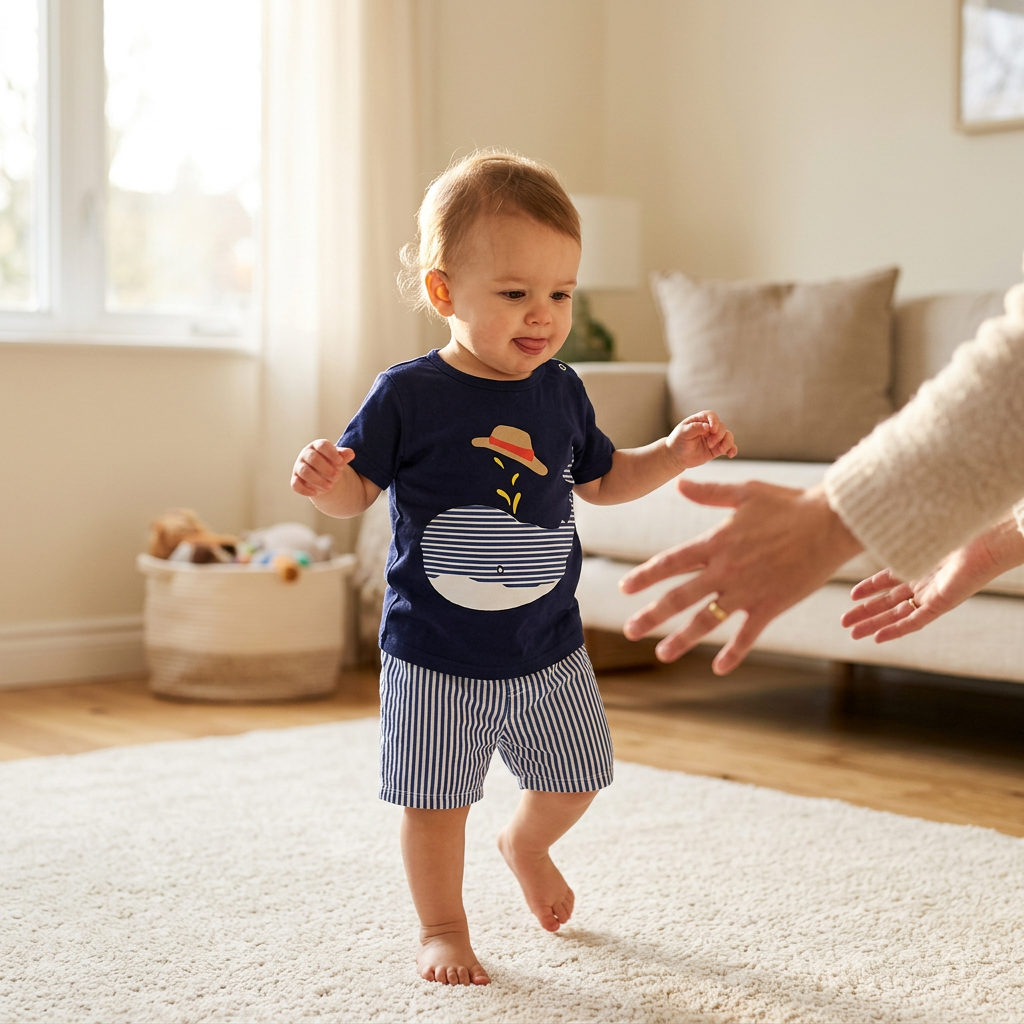
| First independent steps | 9–15 months | 1–5 wobbly steps before sitting down; arms out wide for balance |
| Confident walking | 12–18 months | Consistent, self-directed walking; arms beginning to lower from balance position |
| Running | 14–20 months | Fast, often uncontrolled; turning corners and stopping are still developing |
What Influences When a Baby Walks
Several factors influence walking timing within the normal range:
- Crawling style: Bottom shufflers — babies who scoot on their bottom rather than hands-and-knees crawl — tend to walk later (often 14–16 months) because their leg musculature develops differently. This is normal, not a delay.
- Temperament: Cautious babies may stand independently for weeks before attempting steps. The physical ability is there; the willingness to risk falling takes longer.
- Environment: Babies with more floor time and fewer restrictive devices (bouncers, swings used for extended periods) typically develop mobility milestones earlier.
- Footwear: Babies learn to walk best barefoot or in soft-sole shoes. Hard-soled shoes before walking is established restrict the sensory feedback from the foot that the developing nervous system uses to calibrate balance.
- Genetics: Age of first walking has a significant heritable component. If both parents were late walkers, their children often are too.
The Barefoot Principle and First Shoes
Pediatric podiatrists consistently recommend barefoot indoors as the optimal environment for early walking development. The foot's sensory receptors provide constant feedback about surface texture, temperature, and pressure that the developing nervous system uses to refine balance and gait. Shoes interrupt this feedback loop.
When shoes become necessary — for outdoor surfaces, cold floors, or social settings — the right shoe for a new walker has:
- A completely flexible sole that bends at the ball of the foot with no effort
- A wide toe box that allows toes to spread naturally
- Minimal heel elevation (flat or nearly flat)
- Lightweight construction — heavy shoes alter gait
- A secure but not tight fastening
For the complete guide to first shoes — when to buy them, what to look for, and how to size correctly — see our baby shoes guide.
How to Support Walking Development
- Maximize barefoot floor time: The most important factor. An unobstructed floor is the best walking training environment.
- Push toys: A stable push-along toy (not a baby walker with wheels the baby sits in) allows baby to practice upright walking with light support. Look for something heavy enough not to tip when leaned on.
- Furniture arrangement: A circuit of stable furniture pieces close enough together that baby can cruise from one to the next, with small gaps that encourage letting go momentarily.
- Sit on the floor: A parent sitting a short distance away is one of the most effective walking motivators. Baby wants to reach you.
- Let them fall: Falls are how the balance system learns. A baby who is always caught before falling takes longer to develop the postural reflexes that make walking safe.
Baby Walkers: The Evidence
Baby walkers — the wheeled devices babies sit in and propel with their feet — are banned for sale in Canada and actively discouraged by the AAP and most pediatric guidelines worldwide. The evidence is clear on two points: they cause thousands of serious injuries annually (primarily staircase falls), and they delay walking rather than encouraging it, by reducing floor time and allowing babies to achieve mobility without developing the postural muscles needed for independent walking.
When to Speak to a Pediatrician
Discuss with your pediatrician if:
- Baby is not pulling to stand by 12 months
- Baby is not walking independently by 15 months
- Baby was walking and has stopped or regressed
- Baby walks significantly on tiptoes beyond 2 years (some toe-walking in new walkers is normal)
- Baby's gait appears asymmetrical — one leg noticeably different from the other
For the complete first-year development picture, see our baby milestones by week guide and our 3-month milestones guide.